TBC Removal Activated Alumina Balls: Technical Overview
1. Core Function & Purpose
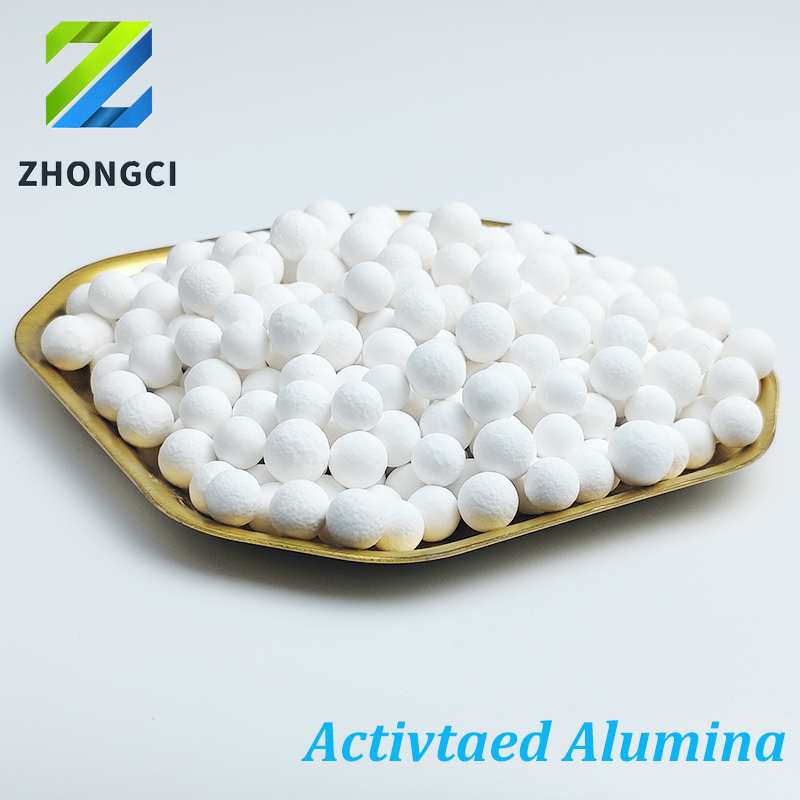
Activated Alumina Balls designed for TBC (tert-Butylcatechol) removal are specialized adsorbents engineered to eliminate trace inhibitors from hydrocarbon streams, particularly in olefin production and polymerization processes. TBC, commonly used as a stabilizer in monomers like butadiene, can poison catalysts if not thoroughly removed. These alumina balls provide high-efficiency de-inhibition through selective adsorption.
2. Scientific Mechanism
- Adsorption Principle: Utilizes a highly porous γ-alumina structure with extensive surface area (typically 300-400 m²/g). The polar surface hydroxyl groups form hydrogen bonds with TBC molecules.
- Selectivity: Engineered pore size distribution (5-10 nm) preferentially captures aromatic TBC compounds while allowing hydrocarbons to pass.
- Regenerability: Saturated beds can be thermally regenerated (180-350°C under inert gas) for repeated cycles.
3. Key Performance Specifications
| Property | Specification |
|---|---|
| Material Composition | High-purity α/γ-Al₂O₃ (>92%) |
| Bulk Density | 0.68-0.75 g/cm³ |
| Crush Strength | >120 N/ball |
| TBC Adsorption Capacity | 8-12 wt% (dynamic bed conditions) |
| Operating Temperature | 10-50°C (50-122°F) |
4. Critical Applications
- Olefin Purification: Removal of TBC from C4 streams (butadiene, isoprene) prior to polymerization.
- LNG/Natural Gas: Protecting cryogenic equipment from inhibitor residues.
- Petrochemicals: Pretreatment for sensitive catalysis units where TBC causes deactivation.
5. Operational Advantages
- Stability: Maintains structural integrity in moist hydrocarbon environments.
- Low Dusting: Smooth spherical geometry minimizes particle attrition.
- Acid Resistance: Tolerates trace acidic components (pH 4+).
- Energy Efficiency: Regeneration consumes 30-50% less energy vs. molecular sieves for comparable duties.
6. Implementation Guidelines
- Bed Design: Fixed-bed absorbers with L/D ratio ≥2 to prevent channeling.
- Flow Velocity: Optimized at 0.2-0.5 m/s for maximum contact time.
- Monitoring: Breakthrough detected via UV spectrophotometry (TBC absorption at 280 nm).
Conclusion
TBC Removal Activated Alumina Balls deliver targeted inhibitor extraction with superior durability and cost-efficiency. Their regenerable nature supports sustainable operations in petrochemical purification, ensuring downstream process integrity while reducing waste generation. For optimal performance, particle size and bed configuration should be validated against specific feedstock compositions.
Note: While this overview synthesizes standard industry knowledge of Activated Alumina for TBC removal, specific product datasheets from manufacturers (e.g., BASF, Axens, Sorbead India) should be consulted for exact performance guarantees.