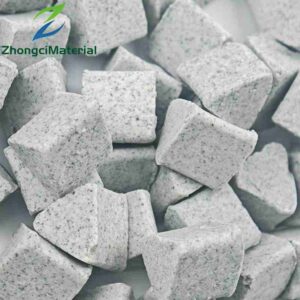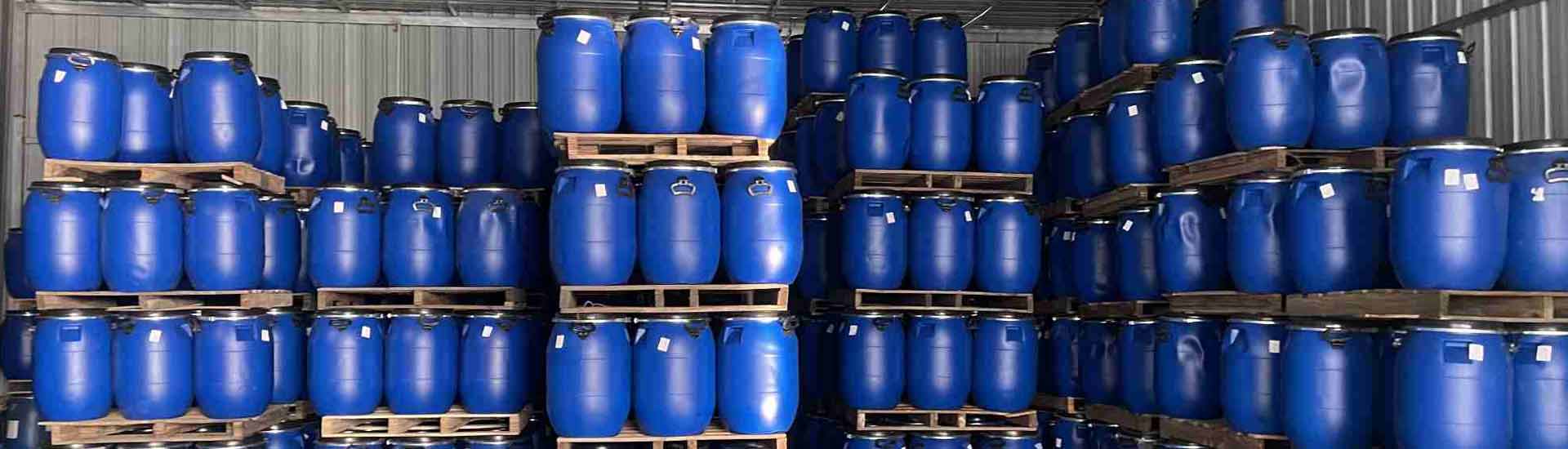
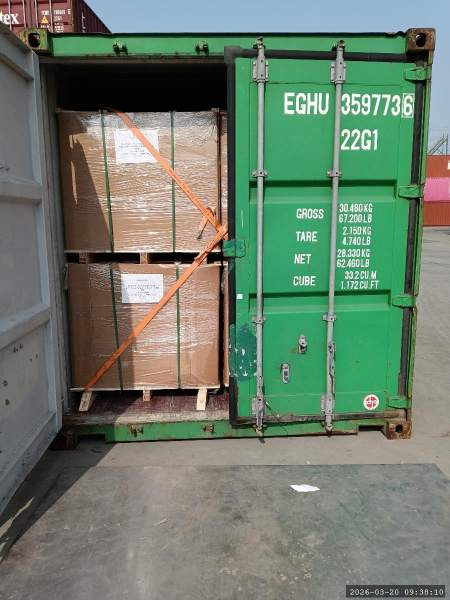
On March 20th, two containers of RTO honeycomb ceramic is loaded well and be ready to Spain.

Detailed Introduction to RTO Honeycomb Ceramic
RTO honeycomb ceramic is a high-performance structured porous ceramic media, serving as the core heat‑storage and heat‑exchange component in regenerative thermal oxidizer (RTO) and regenerative catalytic oxidizer (RCO) systems for VOCs and flue‑gas treatment. It features a monolithic structure with dense, straight, parallel channels, delivering exceptional thermal stability, heat capacity, and flow characteristics for industrial energy conservation and emission control.

1. Material Composition
Common grades are formulated from high-purity inorganic raw materials and sintered at high temperature:
- Cordierite (2MgO·2Al₂O₃·5SiO₂): Low thermal expansion, excellent thermal shock resistance, ideal for medium‑temperature applications up to 1250 °C.
- Mullite (3Al₂O₃·2SiO₂): High refractoriness, good creep resistance, suitable for 1300–1500 °C conditions.
- Corundum / High-Alumina (α-Al₂O₃): Ultra-high temperature resistance up to 1650 °C, strong acid‑alkali corrosion resistance, for harsh high‑heat environments.
2. Structural Characteristics
- Geometry: Square, hexagonal, or triangular straight channels; thin, uniform walls for high open area and low pressure drop.
- Cell Density: Typically 10×10, 20×20, 25×25, 30×30, 40×40 cells per square inch, customizable.
- Standard Modules: Common sizes 100×100×100 mm, 150×150×150 mm, 150×150×300 mm, easy installation and replacement.
- Porosity & Open Area: Open area ratio 55%–75%, high geometric specific surface area for efficient heat transfer.
3. Key Performance Properties
- High Thermal Storage Capacity: Large specific heat capacity and bulk density enable rapid heat absorption and release, supporting thermal efficiency >95%.
- Low Thermal Expansion: Controlled coefficient (cordierite ≤1.5×10⁻⁶/°C) minimizes cracking under rapid heating‑cooling cycles.
- Excellent Thermal Shock Resistance: Withstands frequent temperature fluctuations without fracture, extending service life.
- Low Pressure Drop: Straight channel design reduces flow resistance, lowering fan power consumption.
- High Mechanical Strength: Good compressive strength (≥10 MPa) and wear resistance, stable under gas scour and vibration.
- Chemical Stability: Resistant to oxidation, acidic and alkaline flue gas, and organic vapor corrosion.
- Long Service Life: Normally 3–5 years, up to 8 years under proper operation.
4. Working Principle in RTO Systems
RTO honeycomb ceramic operates in cyclic heat‑storage and heat‑release modes:
- Heat Storage Stage: High‑temperature oxidized exhaust passes through the ceramic bed, transferring heat to the media.
- Heat Release Stage: Low‑temperature incoming waste gas flows through the preheated bed, being rapidly heated to oxidation temperature.This cyclic regeneration drastically reduces auxiliary fuel use and achieves high‑efficiency VOCs destruction.
5. Main Applications
- VOCs Waste Gas Treatment: Printing, coating, petrochemical, pharmaceutical, plastic, and rubber industries.
- Industrial Furnace Energy Saving: Metallurgical heating furnaces, forging furnaces, kilns, hot blast stoves.
- Flue‑Gas Purification & Heat Recovery: Incinerators, power plant NOx control, high‑temp waste heat utilization.
- Catalyst Carrier: Substrate for catalytic combustion and denitrification catalysts in RCO and SCR systems.
6. Advantages Over Conventional Media
Compared with ceramic balls, raschig rings, and saddle rings, RTO honeycomb ceramic provides:
- Larger specific surface area and higher heat‑exchange efficiency
- Significantly lower pressure drop and energy consumption
- Better thermal shock resistance and structural integrity
- Uniform flow distribution and less channeling
- Longer service life and lower total operating cost
7. Selection Guidelines
- Temperature: Cordierite for <1250 °C; mullite for 1250–1500 °C; corundum for >1500 °C.
- Gas Composition: Select corrosion‑resistant grades for acidic/alkali or high‑dust conditions.
- Flow & Pressure Drop: Higher cell count for larger surface area; lower cell count for lower resistance.
- Equipment Size: Match module dimensions and stacking height to RTO chamber design.
8. Summary
RTO honeycomb ceramic is a high‑efficiency, energy‑saving, and environmentally friendly structured ceramic media. Its unique honeycomb architecture and tailored ceramic formulations make it indispensable for modern industrial waste‑gas treatment and thermal energy recovery. It strongly supports energy saving, emission reduction, and sustainable production in petrochemical, painting, metallurgy, and environmental protection sectors.