Abstract:
Carbon Molecular Sieves (CMS) represent a breakthrough in gas separation technology, leveraging tunable pore structures for exceptional performance. Zhongci high-performance carbon molecular sieve membranes, particularly those derived from advanced polymer precursors like polyimides (PIs), achieve unprecedented selectivity and permeability. Recent innovations, such as employing polyphosphoric acid (PPA) as a dual-functional agent, have propelled CMS efficiency to new heights, enabling applications from industrial nitrogen generation to CO₂ capture.
1. Introduction to Carbon Molecular Sieves (CMS)
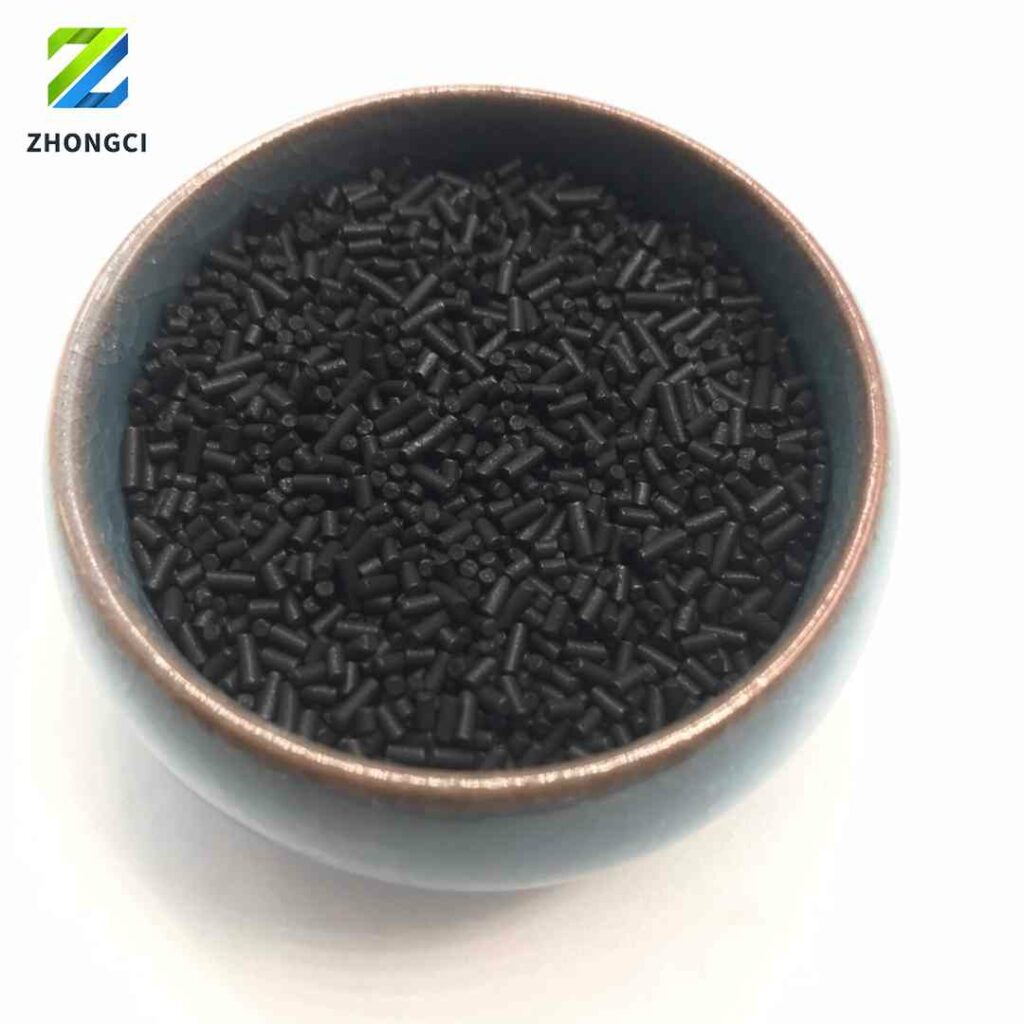
CMS are non-stoichiometric carbon materials prized for their ultrafine micropores (<2 nm), which selectively adsorb gases based on molecular size and diffusion kinetics. Unlike traditional methods (e.g., cryogenic separation), CMS operate efficiently under pressure swing adsorption (PSA) at ambient temperatures. This makes them ideal for nitrogen generation, CO₂ capture, and hydrogen purification.
2. Breakthrough: PPA-Enhanced CMS Membranes
A landmark study demonstrates how polyphosphoric acid (PPA) radically enhances CMS performance:
- Dual Role Mechanism: PPA acts as both a cross-linker and porogen when integrated into polyimide (PI) precursors.
- Structural Optimization:
- Creates uniform pores within the PI matrix.
- Fine-tunes ultramicropores (<7 Å) during carbonization.
- Performance Metrics (for 5 wt% PPA hybrid precursor):
- CO₂ permeability: 1378.3 Barrer (10× increase vs. pure PI).
- He permeability: 1431.4 Barrer.
- Selectivity: CO₂/CH₄ = 81.5; He/CH₄ = 89.9 (278–307% improvement).
- Stability: Maintains efficiency in continuous 7-day operations.
3. Industrial Applications & Standards
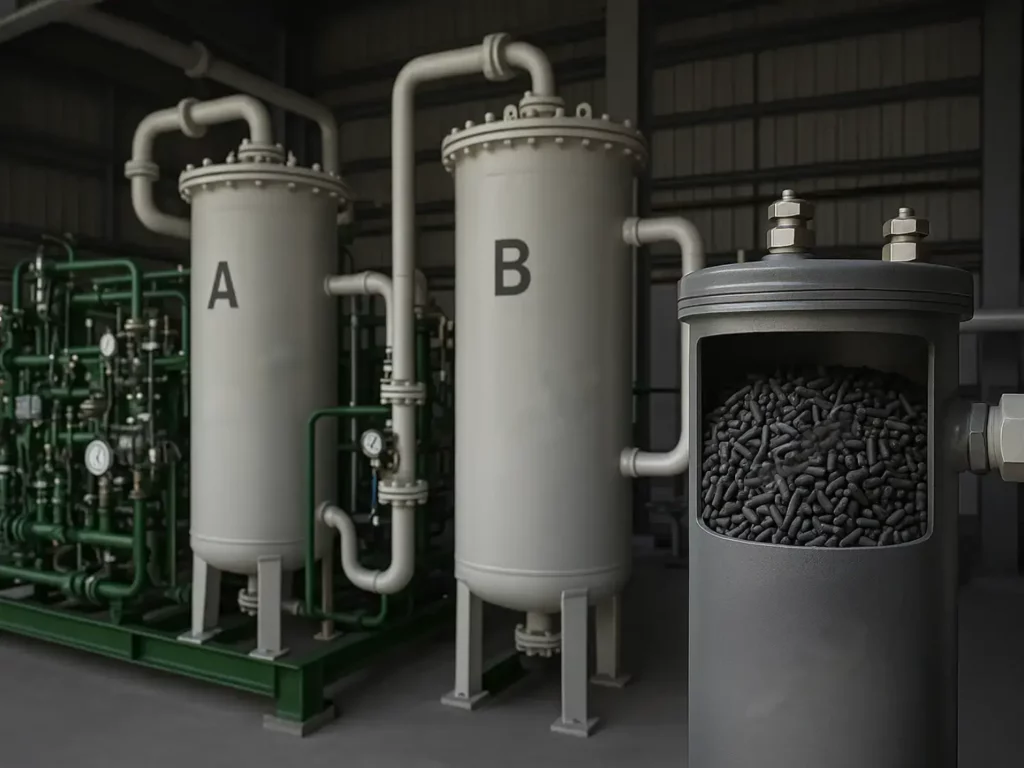
CMS membranes are pivotal in:
- Nitrogen Generation: PSA systems use CMS adsorbents (e.g., CMS-240, CMS-HP1) to separate N₂ from air by exploiting faster O₂ diffusion into micropores .
- Gas Purification: Targets CO₂/CH₄ separation for natural gas upgrading.
- Technical Specifications (Industrial CMS):
- Particle size: 1.6–2.2 mm.
- Critical packaging and filling protocols to prevent fragmentation during PSA cycling.
4. Advantages Over Alternatives
| Feature | Zhongci CMS | Traditional Adsorbents |
|---|---|---|
| Permeability | Ultrahigh (e.g., >1300 Barrer for CO₂) | Moderate |
| Selectivity | Tunable via precursor engineering | Fixed pore structure |
| Energy Efficiency | Ambient-temperature PSA operation | Energy-intensive processes |
| Stability | Long-term mechanical/thermal resilience | Prone to degradation |
5. Future Outlook
The precision control of ultramicroporosity via PPA cross-linking opens avenues for:
- Multi-gas separation systems (e.g., H₂/CH₄, O₂/N₂).
- Scale-up protocols for industrial membrane modules.
- Sustainable manufacturing using bio-derived polyimide precursors.
Conclusion
Zhongci high-performance CMS membranes redefine gas separation through synergistic material design. By harnessing PPA-modified polyimides, these membranes achieve unparalleled permeability-selectivity combinations, positioning CMS as the forefront solution for clean energy and industrial gas processing. Future research will focus on modular scalability and cost-effective production.