Arsenic contamination in groundwater poses severe health risks globally. Zhongci activated alumina (AA) has emerged as a highly effective adsorbent for arsenic removal, combining scientific innovation with practical engineering solutions. This article explores its mechanisms, advantages, and real-world applications.
1. Scientific Basis of Arsenic Adsorption
Activated alumina removes arsenic through ligand exchange and electrostatic attraction. When coated with iron acetate (e.g., Iron Acetate Coated Activated Alumina/IACAA), its capacity significantly increases. Studies show IACAA effectively adsorbs arsenite [As(III)] across varying pH levels, with kinetics and thermodynamics confirming high efficiency . Key characteristics include:
- Surface Modification: Iron oxide coatings enhance arsenic affinity.
- Material Properties: Analyzed via XRD, FTIR, EDAX, and SEM for optimal pore structure and active sites.
2. Engineering Applications and Performance
Large-scale projects demonstrate Zhongci AA’s viability:
- Inner Mongolia Case Study: A plant in Ulan Town, Ordos, reduced arsenic levels from 47 μg/L to 2.7 μg/L (below China’s standard of 10 μg/L), serving 40,000 residents. The system processes 2,000 tons/day with minimal waste (<1% backwash water) due to advanced recycling technology.
- Operational Efficiency: Fully automated controls enable remote monitoring, reducing labor costs.
3. Economic and Environmental Benefits
Zhongci AA offers sustainable advantages
- Resource Conservation: Backwash water recovery rates reach 70–80%, slashing freshwater consumption by 40–80 tons daily (vs. conventional systems).
4. Commercial Availability and Future Outlook
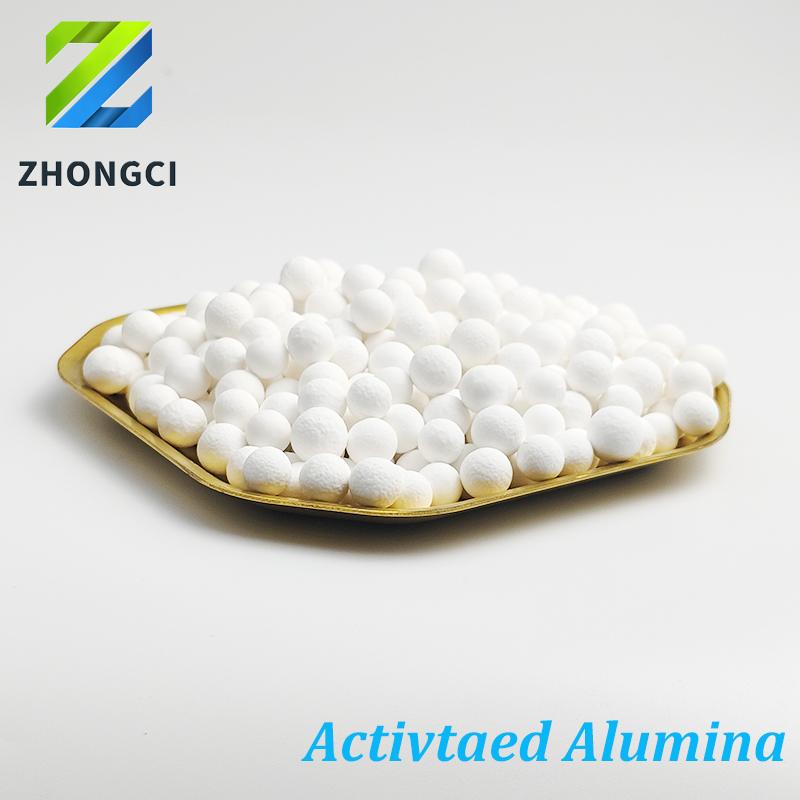
Activated alumina products (e.g., 3–5 mm AA balls) are commercially available for arsenic removal in industrial settings like fertilizer plants and refineries. Future advancements may focus on:
- Hybrid Materials: Combining AA with molecular sieves or silica gel for multi-contaminant removal.
- Global Scalability: Adapting designs for regions with endemic arsenic contamination.
Conclusion
Zhongci activated alumina bridges laboratory research and real-world implementation, offering a reliable, cost-efficient, and eco-friendly solution for arsenic-free water. Its success in projects like Ordos highlights its potential to address global water safety challenges.