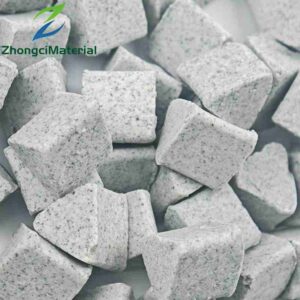
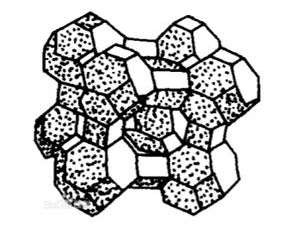
Zeolite Molecular sieve is an artificially synthesized hydrated aluminosilicate (zeolite) or natural zeolite with the ability to screen molecules. Its chemical formula is (M ′ 2M) O · Al2O3 · xSiO2 · yH2O, where M ′ are monovalent and divalent cations such as K+, Na+, Ca2+, etc. It has many uniformly sized pores and neatly arranged pores in its structure. And molecular sieves with different pore sizes separate molecules of different sizes and shapes.
Molecular Sieve Characteristics
And molecular sieves have several properties: adsorption performance, ion exchange performance, catalytic performance. The adsorption of zeolite molecular sieves is a physical process. The main reason for adsorption is the “surface force” generated by the molecular gravity acting on the solid surface. When the fluid flows through, some molecules in the fluid collide with the adsorbent surface due to irregular motion. It results in molecular concentration on the surface and reducing the number of such molecules in the fluid, for the purpose of separation and removal.
Due to the fact that adsorption does not undergo chemical changes, as long as the molecules concentrated on the surface are driven away. Zeolite molecular sieves will have adsorption capacity again. This process is the reverse process of adsorption, called desorption or regeneration. For example, when indoor environments contain harmful substances such as formaldehyde, VOCs, etc., adsorption can be very helpful. If harmful substances are absorbed too much by the human body, they will naturally corrode health. And the absorption performance of molecular sieves can effectively solve this problem.
Molecular Sieve Polarity
And this principle arises due to the uniform pore size of zeolite molecular sieves and the strong polarity within the pores. It can strongly interact with molecules containing polar groups on the surface of zeolite molecular sieves. Or it induces polarization of polarizable molecules to produce strong adsorption. And ion exchange performance, as ion exchange, refers to the exchange of compensating cations outside the framework of zeolite molecular sieves. Ionic exchange performance can be achieved by changing the pore size of zeolite molecular sieves through ion exchange. Thereby it alters their properties and achieving the goal of selective adsorption and separation of mixtures.
Normally, we cannot recognize formaldehyde indoors with the naked eye. And can only use tools such as detectors as assistance to detect whether formaldehyde is present. Often, we only need to put a bag of “zeolite deodorization. And purification balls” indoors to replace this tedious task, while also combining multiple functions.
The reason why zeolite molecular sieves can achieve catalytic performance is that they have a unique regular crystal structure. In that structure each type has a certain size and shape of pore structure, and has a large specific surface area. Most zeolite molecular sieves have strong acid centers on their surfaces, and there is a strong Coulomb field in the crystal pores that polarizes them. These characteristics make it an excellent catalyst. When zeolite molecular sieve is used as a catalyst or catalyst carrier, the catalytic reaction is controlled by the pore size of zeolite molecular sieve.
The first reaction of a person when faced with something bad is often shock, and then it’s about how to quickly eliminate it. So this performance can be very helpful, because catalytic performance, like an accelerator, appears in zeolite itself, which has a multiplier effect.