What is CMS carbon molecular sieve adsorption
Carbon molecular sieve is a non-polar carbon material. Carbon molecules are used for separating air and enriching nitrogen gas. Adopting normal temperature and low pressure nitrogen production technology, the investment cost is low. The nitrogen production speed is fast, and the nitrogen production cost is low.
Working principle of carbon molecular sieve
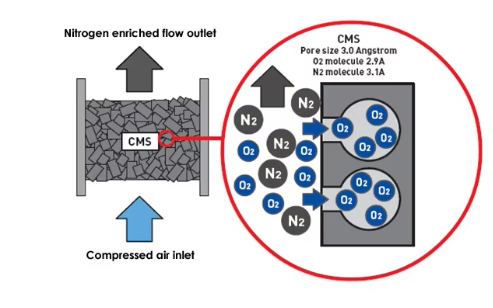
Carbon molecular sieve is used to separate oxygen and nitrogen based on its sieving properties. When molecular sieves adsorb impurity gases, macropores and mesopores only act as channels. It transporte adsorbent molecules to micropores and micropores. Micro pores and sub pores are the true adsorption volumes. Carbon molecular sieves contain a large number of micropores, which allow small dynamic molecules to rapidly diffuse into the pores. And it restricts the entry of large-diameter molecules. Due to the ability to separate the relative diffusion rates of gas molecules of different sizes. It is possible to separate the components of gas mixtures. When preparing carbon molecular sieves, the distribution of micropores in carbon molecular sieves should be 0.28-0.38nm according to the size of the molecular circumference. Within the micropore range, oxygen can rapidly diffuse into the pores through micropores, while nitrogen is difficult to achieve oxygen nitrogen separation through micropores.
The Raw Material of Carbon Molecular Sieve
The raw material of carbon molecular sieve is phenolic resin, which is processed first, then powdered, and blended with the substrate. The main purpose of the substrate is to increase strength and prevent crushing of powder; The second step is to activate the pores and pass them through the activator at an appropriate temperature. They undergo intense chemical reactions with more active non fixed alpha carbon atoms, expanding their surface area and gradually forming pores for 10 to 60 minutes. The third step is to adjust the pore structure by using chemical vapor, such as benzene settling on the microporous walls of carbon molecular sieves, and adjusting the pore size to meet the requirements.