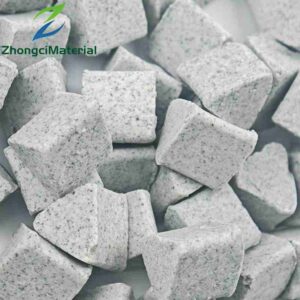
Molecular sieves are an artificially synthesized hydrated aluminosilicate (zeolite) or natural zeolite with the ability to screen molecules. Its chemical formula is (M ′ 2M) O · Al2O3 · xSiO2 · yH2O, where M are monovalent and divalent cations such as K+, Na+, Ca2+, Ba22+, etc.
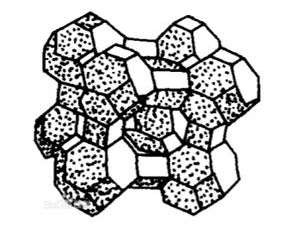
It has many uniformly sized pores and neatly arranged pores in its structure. And molecular sieve with different pore sizes separate molecules of different sizes and shapes.
According to the different molecular ratios of SiO2 and Al2O3, molecular sieves with different pore sizes are obtained.
Classification of Molecular Sieve
Its models include: 3A (potassium type A), 4A (sodium type A), 5A (calcium type A), 10Z (calcium type Z), 13Z (sodium type Z), Y (sodium type Y), etc.
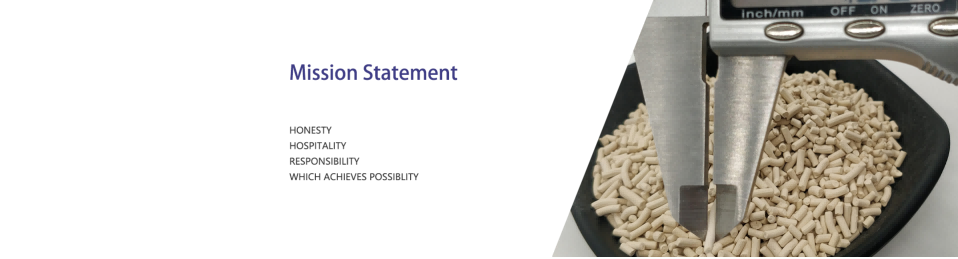
It has high adsorption capacity, strong selectivity, and high temperature resistance.
Widely used in organic and petrochemical industries, it is also an excellent adsorbent for gas dehydration.
The most basic structure of the molecular sieve skeleton is SiO4 and AlO4 tetrahedra. So it can form a three-dimensional network structure of crystals through the binding of shared oxygen atoms.
This combination forms voids and pores with molecular level and uniform pore size.
Due to different structures and forms, the “cage” shaped spatial pores divide into cage structures such as alpha, beta, gamma, hexagonal columns, and octahedral zeolites.
The Function of Molecular Sieve
Molecular sieve function: Adsorption function: The adsorption of substances by molecular sieves comes from physical adsorption (van der Waals force), and their crystal pores have strong polarity and Coulomb field, exhibiting strong adsorption ability for polar molecules (such as water) and unsaturated molecules.
Screening function: The pore size distribution of molecular sieves is very uniform, and only substances with a molecular diameter smaller than the pore diameter can enter the crystal pores of the molecular sieve.
By distinguishing molecules of different substances based on their adsorption priority and size, they are vividly as “molecular sieves”.
Molecular sieves have extremely strong moisture absorption ability and are used for gas purification treatment.
When storing, direct exposure to air should be avoided.
Molecular sieves that have been stored for a long time and have already absorbed moisture should be regenerated before use.
Molecular sieves should avoid oil and liquid water.
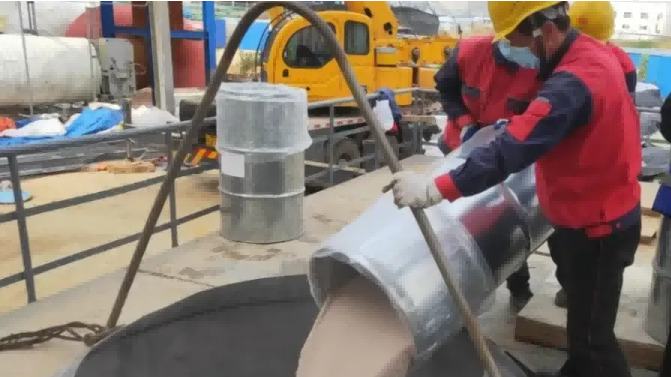
When using, try to avoid contact with oil and liquid water as much as possible. The gases used for drying in industrial production include air, hydrogen, oxygen, nitrogen, argon, etc