1. Introduction: The Significance of High-Surface-Area Alumina
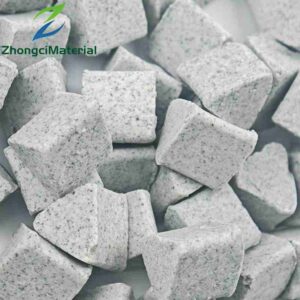
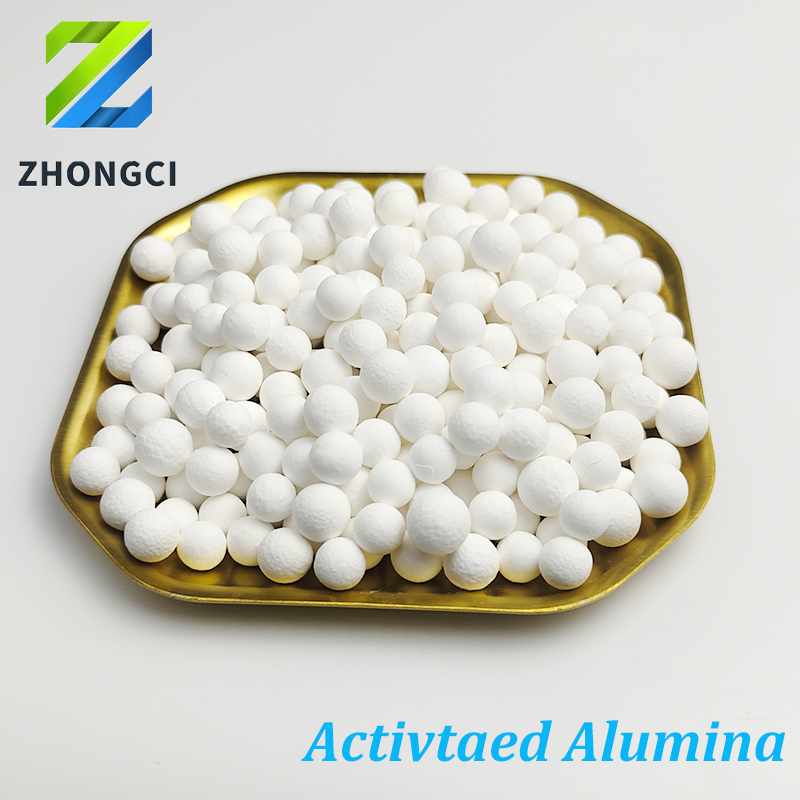
Activated aluminum oxide (γ-Al₂O₃) with engineered high surface area (>150 m²/g) is a cornerstone material in catalysis, energy storage, and environmental remediation. The “Zhongci” designation refers to a proprietary activation process optimizing pore structure and surface reactivity, enabling unprecedented interfacial activity. This article synthesizes recent breakthroughs in its deployment across cutting-edge fields.
2. Synthesis and Structural Advantages
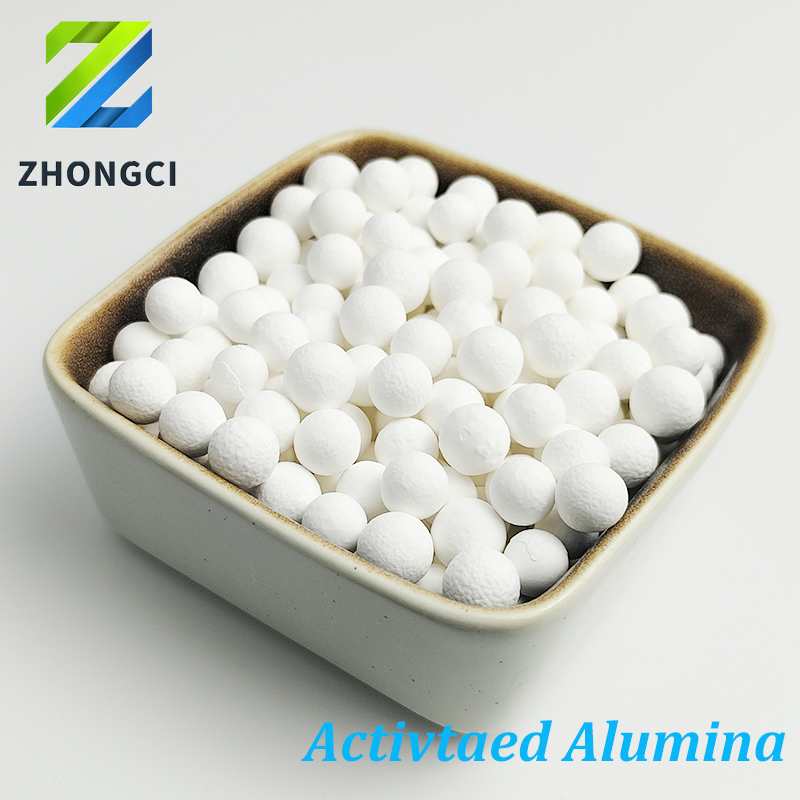
Zhongci-type alumina achieves its exceptional surface area through:
- Sol-gel templating: Creating mesopores (2–50 nm) ideal for molecule diffusion.
- Plasma-assisted calcination: Enhancing crystallinity while minimizing pore collapse.
- Dopant integration (e.g., Mg, Ce): Stabilizing γ-phase structure against thermal degradation.
Result: Surface areas exceeding 300 m²/g with tunable acid/base sites, critical for adsorption and catalytic cycles.
3. Revolutionizing Battery Electrode Interfaces of Zhongci activated aluminum oxide
Recent ab initio molecular dynamics (AIMD) simulations confirm that ultrathin alumina coatings (<5 nm) on cathodes drastically suppress electrolyte degradation. Key findings include:
- Electrolyte stabilization: Coating reduces ethylene carbonate (EC) decomposition by 47% vs. bare cathodes, curtailing capacity fade.
- Mechanical resilience: Axial strain tests show coated interfaces withstand >8% deformation without delamination, vital for long-cycle stability.
- Synergy with conductive additives: Combined with high-surface-area carbon slurries (e.g., activated carbon black), alumina-coated electrodes boost redox flow battery capacity by 32%.
4. Beyond Energy Storage: Emerging Applications
► Environmental Catalysis
- CO₂ capture: Zhongci activated aluminum oxide ’s Lewis acid sites chemisorb CO₂ at 120°C with 4.2 mmol/g capacity, outperforming zeolites.
- Heavy metal adsorption: Pb²⁺ removal efficiency reaches 99.2% via surface complexation.
► Exotic Matter Probes
Surface topography modifications (e.g., nano-“mountains”) enable novel astrophysical sensors. Pulsar studies suggest alumina-coated probes could detect supranuclear quark matter states in extreme gravitational fields.
5. Industrial Scale-Up Challenges of Zhongci activated aluminum oxide
While lab-scale results are promising, barriers remain:
- Cost: Plasma activation adds ~20% to production costs vs. conventional alumina.
- Uniformity control: Sub-2nm coatings require atomic-layer deposition (ALD), limiting throughput.
Innovation pathway: Lebedev quadrature-based modeling accelerates coating optimization, reducing computational costs by 85%.
6. Conclusion and Outlook
Zhongci large-surface-area activated alumina represents a paradigm shift in interface engineering. Future priorities include:
- Multifunctional composites: Hybrids with 2D materials (MXenes, graphene) for dual ion/electron transport.
- Topography-aware designs: Leveraging surface asperities to manipulate electrochemical sparking.
As synthesis scales, this material will underpin next-gen sustainable technologies from solid-state batteries to quantum sensors.