Nitrogen carbon molecular sieve utilize its sieving properties to achieve the separation of oxygen and nitrogen.
1. When nitrogen molecular sieve adsorbs impurity gases
macro-pores and micro-pores only act as channels, transporting the adsorbed molecules to micro-pores and sub micro-pores, which are the true adsorption volumes.
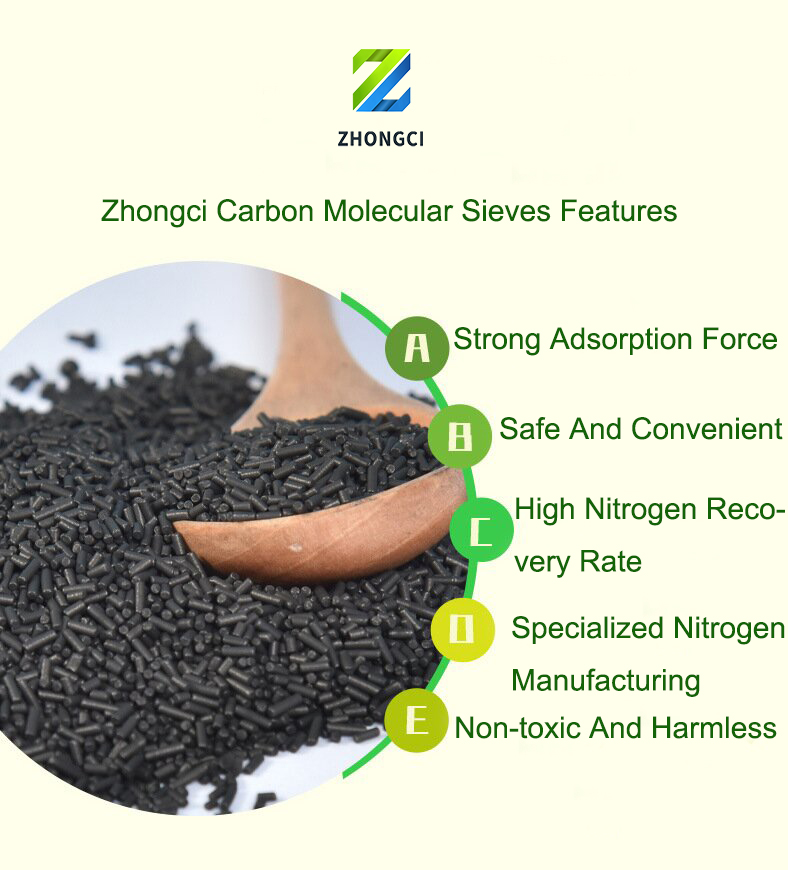
The carbon molecular sieve contains a large number of micro-pores inside. It allows molecules with smaller kinetic sizes to quickly diffuse into the pores, while restricting the entry of larger diameter molecules.
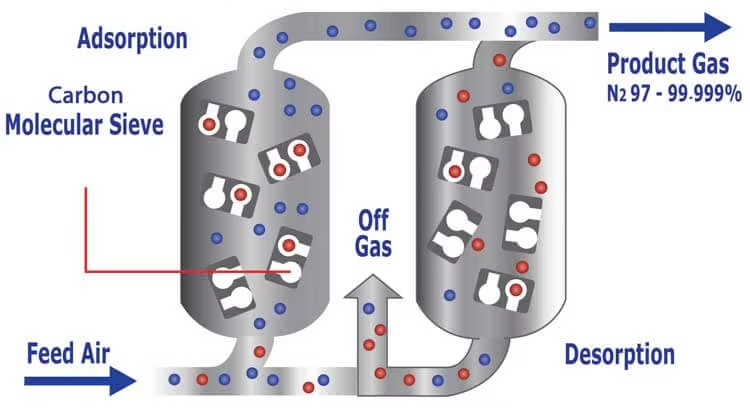
Due to the differences in the relative diffusion rates of gas molecules of different sizes, the components of gas mixtures can be effectively separated.
Therefore, when manufacturing carbon molecular sieves, the distribution of micro-pores inside the sieve should be between 0.28 and 0.38 nm based on the size of the molecules.
2. The Micro-Pore Sizes
Within this range of micro-pore sizes, oxygen can quickly diffuse into the pores through the micro-pore openings, while nitrogen is difficult to pass through the micro-pore openings, thus achieving oxygen and nitrogen separation.
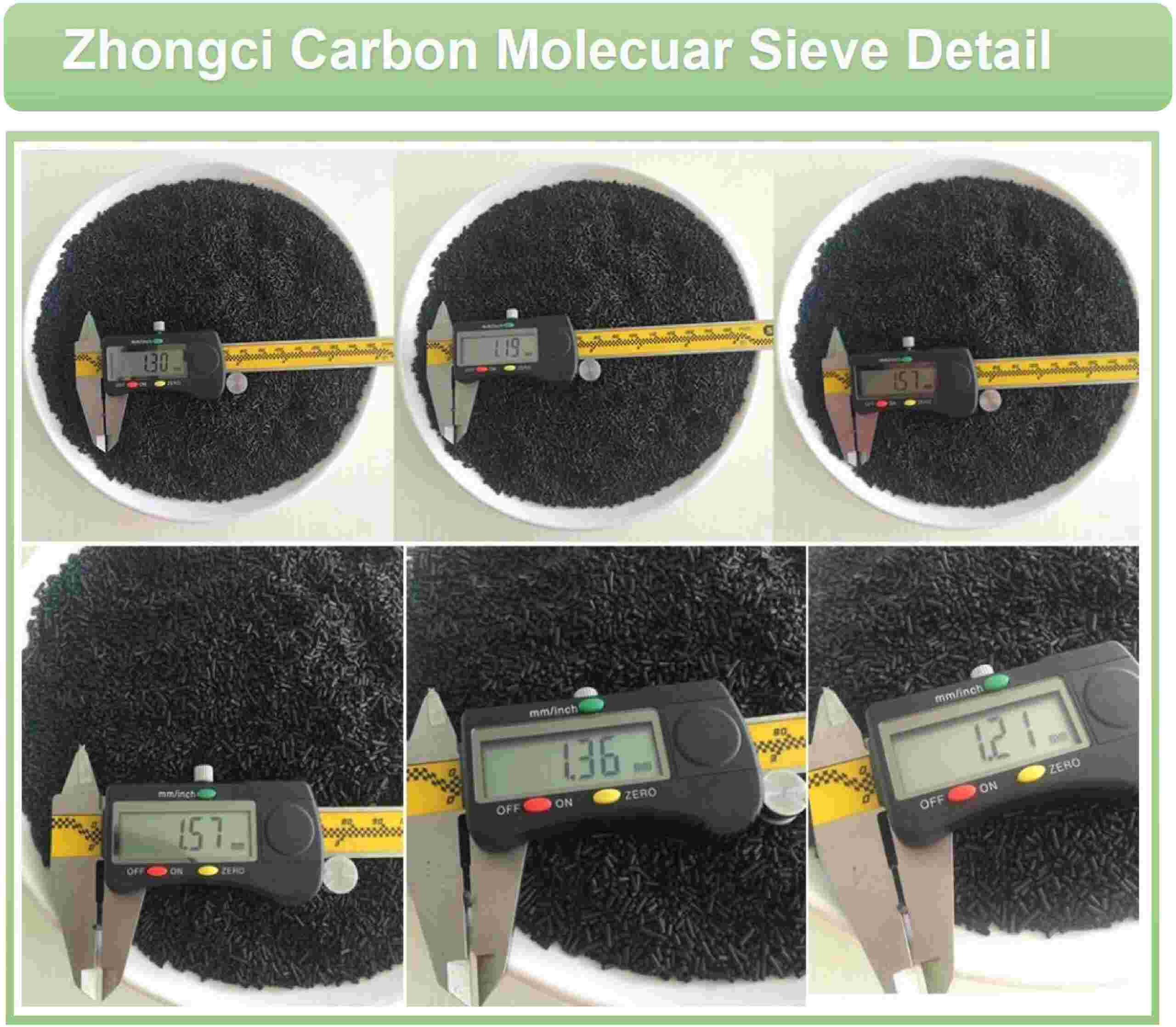
The pore size of micropores is the basis for separating oxygen and nitrogen in carbon molecular sieves. If the pore size is too large, oxygen and nitrogen molecular sieves can easily enter the micro-pores and cannot achieve separation; However, if the pore size is too small, oxygen and nitrogen cannot enter the micro-pores and cannot achieve separation.
Due to limitations in conditions, domestic molecular sieves do not have good control over pore size. The pore size distribution of carbon molecular sieves sold on the market ranges from 0.3 to 1 nm, while only Iwatani molecular sieve achieves 0.28 to 0.36 nm.
The raw materials for carbon molecular sieves are coconut shells, coal, resin, etc. The first step is to process and pulverize them, and then mix them with the base material. The base material is mainly used to increase strength and prevent crushing and pulverization; The second step is to activate pore formation by introducing activators at a temperature of 600-1000 ℃. Common activators include water vapor, carbon dioxide, oxygen, and their mixtures.
They undergo thermochemical reactions with more active amorphous carbon atoms to gradually form pores and increase the specific surface area. The activation time for pore formation varies from 10 to 60 minutes; The third step is to adjust the pore structure, using the vapor of chemical substances such as benzene to deposit on the micro-porous walls of carbon molecular sieves to adjust the pore size to meet the requirements.