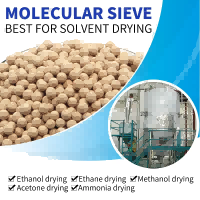
The size of molecular sieve particles has a significant impact on their adsorption capacity. Generally speaking, smaller molecular sieve particles have a larger surface area and more active sites, which can enhance the adsorption capacity. This is because the increased surface area provides more opportunities for molecules to interact with the adsorbent.
the relationship between particle size and adsorption capacity
On the other hand, larger molecular sieve particle have a smaller surface area and fewer active sites, resulting in a reduced adsorption capacity. However, it’s important to note that the relationship between particle size and adsorption capacity is not always linear. Factors such as pore size, surface chemistry, and the nature of the adsorbate also play crucial roles in determining the overall adsorption performance.
In addition, the size of molecular sieve particle can affect the flow rate of the gas or liquid passing through them. Smaller particles can create more resistance to flow, which can lead to pressure drops and reduced efficiency in industrial applications. On the other hand, larger particles may allow for faster flow rates but could also result in less effective adsorption due to their reduced surface area.
practical applications of molecular sieve particles
In practical applications, optimizing the particle size of molecular sieves is essential to achieve the desired adsorption performance. For instance, in gas separation processes, smaller molecular sieve particles preferred due to their enhanced adsorption capacity, while in catalysis, larger particles might be more suitable to maintain a high surface-to-volume ratio and prevent excessive pressure drop within the reactor.
In conclusion, the size of molecular sieve particle has a direct impact on their adsorption capacity, with smaller particles generally offering better performance. However, careful consideration must be to other factors and the specific application requirements when selecting an appropriate particle size for a given molecular sieve material.