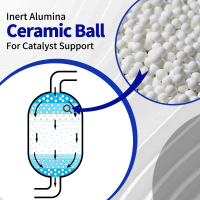
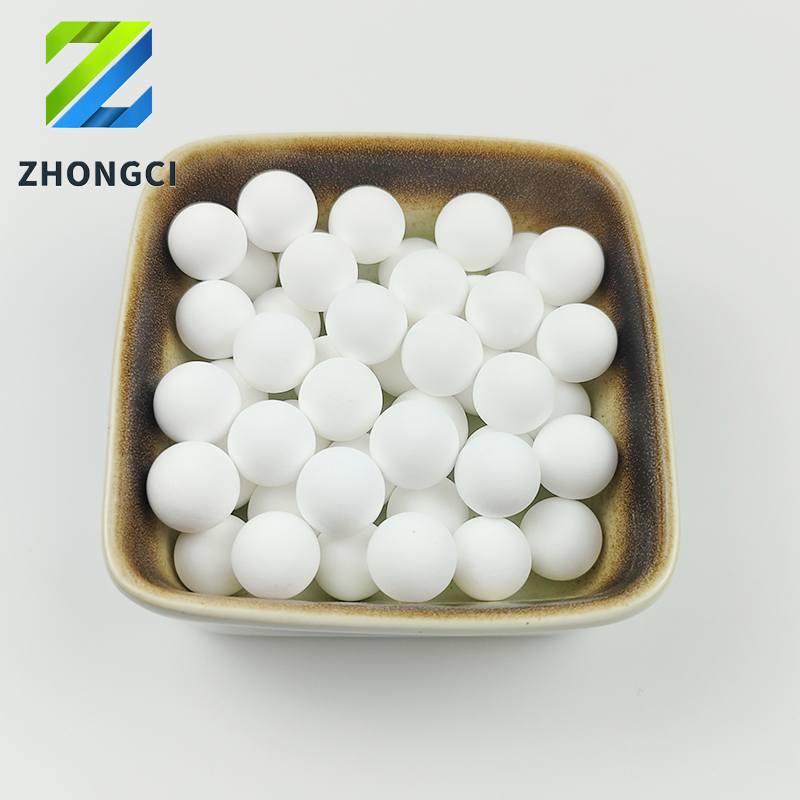
Inert alumina ceramic balls are critical components in adsorption dryers, despite their lack of intrinsic adsorption capacity. Their inclusion is driven by functional necessity and cost efficiency, as outlined below:
Core Functions of Inert Alumina Ceramic Balls
- Mechanical Protection for Adsorbents
These balls are placed at the bottom layer of the adsorbent bed, acting as a protective barrier for fragile adsorbents like activated alumina and molecular sieves. Their high mechanical strength prevents adsorbent particles from being shattered by sudden pressure surges during airflow, which could otherwise disrupt the bed structure and cause system malfunctions. - Uniform Airflow Distribution
By stabilizing the airflow, they ensure even contact between the gas stream and adsorbents, avoiding localized channeling or uneven adsorption. This uniformity is critical for maintaining consistent outlet gas quality, such as preventing excessive carbon dioxide levels due to adsorbent bed disruption. - Cost Optimization
While pure molecular sieve beds offer superior adsorption performance, they increase operational costs. Adding a layer of inert alumina ceramic balls allows the use of a hybrid bed (e.g., activated alumina for moisture removal and molecular sieves for CO₂ adsorption), reducing expenses without compromising efficiency.
Key Properties Enabling Performance
Inert alumina ceramic balls exhibit:
- Chemical Stability: Resistance to moisture, CO₂, and corrosive environments.
- Thermal Shock Resistance: Ability to withstand temperature fluctuations during regeneration cycles.
- Low Porosity: Non-adsorptive nature ensures they do not compete with active adsorbents.
Typical Bed Configuration
Adsorption dryers typically use a layered structure:
| Layer Position | Material | Function |
|---|---|---|
| Bottom | Inert Alumina Balls | Protection and airflow distribution |
| Middle | Activated Alumina | Primary moisture adsorption |
| Top | Molecular Sieves | Deep drying (e.g., CO₂ removal) |
Note: Some systems use full molecular sieve beds for enhanced performance but at higher costs.
Conclusion
Inert alumina ceramic balls are indispensable for protecting adsorbents, ensuring operational stability, and optimizing costs in adsorption dryers. Their mechanical and chemical properties make them a cost-effective solution for maintaining long-term dryer efficiency and reliability.