1. Introduction
Tert – butylcatechol (TBC) is a widely used polymerization inhibitor in industries, especially in the production and storage of isoprene (IP). However, in some cases, the presence of TBC needs to be removed to obtain polymer – grade IP. TBC Removal Activated alumina has emerged as an effective material for this purpose.
2. Properties of Activated Alumina
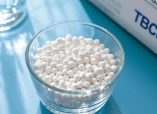
Activated alumina, with the chemical formula γ – Al₂O₃, is a porous, high – dispersion solid material. It has a large specific surface area, often exceeding 1000 square meters per gram, which provides a large number of adsorption sites. It is spherical in appearance, with a smooth surface, high mechanical strength, and is odorless. It is insoluble in water and alcohol, and has strong water – absorption capacity without cracking, swelling or deformation after absorbing water. It also has excellent thermal stability and surface activity, meeting the requirements for catalytic and adsorption applications .
3. The Mechanism of Removing TBC by Activated Alumina
The removal of TBC by activated alumina is mainly base on its adsorption properties. Due to the porous structure of activated alumina, it can physically adsorb TBC molecules. The surface of activated alumina may also have some chemical interactions with TBC, which enhance the adsorption effect. The high – specific surface area and abundant pores of activated alumina allow it to capture TBC molecules effectively, separating them from the medium such as isoprene.
4. Experimental Process of Removing TBC from IP
4.1 Activation of Activated Alumina
The activated alumina particles need to be activate before use. The activation process typically includes 2 – hour drum – wind heating at 110°C and 3 – hour calcination at 400°C. This activation step can improve the adsorption performance of activated alumina by removing impurities and moisture on the surface and increasing the number of active adsorption sites.
4.2 Adsorption Treatment
The activated alumina particles are to the raw IP containing TBC for immersion treatment. The reaction is carry out at room temperature to reduce the loss of IP caused by high – temperature polymerization. Samples are at regular intervals (such as 0.5h, 1h, 3h, 6h, 12h, 24h, 48h) for analysis, including moisture value detection and gas – phase analysis. The polymerization conversion rate of IP is also to evaluate the adsorption effect of activated alumina on TBC. By comparing with the standard sample of IP without TBC, the effectiveness of TBC removal can determin.
5. Advantages of Using Activated Alumina to Remove TBC
5.1 Energy – saving and Time – saving
Compared with traditional distillation methods for removing TBC, using activated alumina for adsorption is more energy – efficient and time – saving. Distillation methods are often water – consuming, electricity – consuming, and time – consuming, while the adsorption process can be at room temperature with relatively simple equipment and operations.
5.2 Wide Applicability
Activated alumina has a wide range of applications in the removal of various substances in addition to TBC. It can be used as an adsorbent, desiccant, and catalyst carrier in different industries such as petrochemical, fertilizer, and water treatment industries.
In conclusion, activated alumina is a promising material for the removal of TBC, with its excellent adsorption properties and relatively simple operation process, which can effectively solve the problem of TBC removal in industrial production.