
描述
Activated Alumina for Gas Desulfurization: An Overview
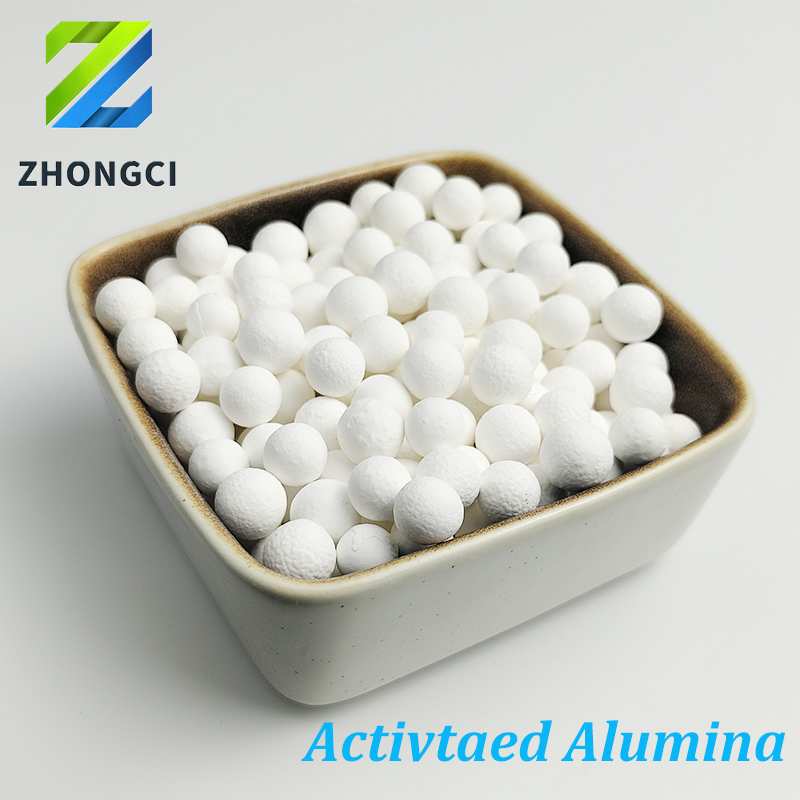
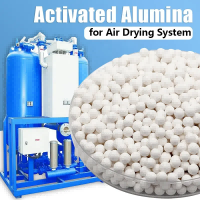
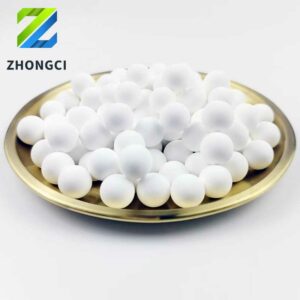
Activated alumina (AA) is a highly porous, granular form of aluminum oxide (Al₂O₃) with a vast internal surface area. Its unique physicochemical properties make it a valuable adsorbent material in environmental engineering, particularly for gas desulfurization – the removal of sulfur compounds (like SO₂, H₂S) from industrial flue gases.
1. Mechanism of Action * Adsorption:
Activated alumina primarily removes sulfur dioxide (SO₂) and other acid gases via physical adsorption and chemisorption onto its highly active surface sites .
* Surface Chemistry: The surface hydroxyl groups (-OH) on alumina can react with acidic gases. For SO₂, adsorption can involve weak physisorption or stronger chemical interactions, potentially forming surface sulfites or sulfates depending on conditions like temperature and gas composition.
* Role in Wet Scrubbing Systems: While AA can be used in dry processes, it often plays a crucial role within Wet Flue Gas Desulfurization (WFGD) systems. In these systems: * Flue gas is scrubbed with an alkaline slurry (commonly limestone or lime-based). * Activated alumina can be incorporated into the scrubbing media or used as a downstream polishing adsorbent. * It helps capture SO₂, especially under specific pH conditions (often maintained between 4.0 and 6.5 for optimal oxidation and precipitation of byproducts like gypsum) .
2. Advantages of Activated Alumina * High Surface Area & Porosity:
Provides numerous active sites for gas molecule capture .
* Thermal Stability: Maintains structural integrity at relatively high temperatures encountered in flue gas streams.
* Chemical Resistance: Resists degradation in acidic environments common in desulfurization processes (noted in water context, relevant for acidic scrubber conditions).
* Regenerability: Can often be regenerated by heating or pressure swing, allowing for multiple adsorption cycles and reducing operational costs .
* Versatility: Effective for various sulfur compounds (SO₂, H₂S) and can be tailored/modified for enhanced performance.
* Compatibility: Can be integrated into existing WFGD infrastructure as a component or guard bed.
3. Surface Modification for Enhanced Performance
Research demonstrates that the desulfurization efficiency of activated alumina can be significantly boosted through surface modification. A key example is the impregnation with manganese compounds (e.g., forming MnOOH-supported AA): * Manganese oxides act as active catalytic sites, promoting the oxidation of adsorbed SO₂ to sulfate, facilitating its removal or conversion into a separable byproduct like gypsum. * This modification enhances the adsorption capacity and kinetics compared to plain activated alumina.
4. Applications in Desulfurization Systems
Activated alumina finds application in several contexts within gas desulfurization:
* Dry Sorption Processes: Used as a direct adsorbent in packed beds for SO₂/H₂S removal, especially suitable for smaller gas streams or specific industrial applications.
* WFGD Integration: * Component in Scrubbing Slurries: Can be added to enhance the adsorption capacity or catalytic activity of limestone/lime slurries.
* Polishing Adsorbent: Placed downstream of the main scrubber unit to capture residual SO₂ that escapes the primary scrubbing stage, ensuring very low emission levels.
* Handling System Streams: Used in subsystems processing overflow or specific streams within the complex WFGD setup, often operating within the critical pH range of 4.5 to 6.0 .
* Acid Gas Removal: Effective for H₂S removal from various gas streams (e.g., natural gas, biogas).
5. Challenges and Considerations
* Moisture Sensitivity: Performance can be reduced in the presence of high humidity, as water vapor competes for adsorption sites. Pre-drying may be necessary in some applications.
* pH Sensitivity: While effective in acidic conditions relevant to WFGD, its performance can be pH-dependent (observed in water defluoridation, a relevant analogy). Optimal pH control in scrubber systems is crucial .
* Attrition Resistance: Mechanical strength is important for long-term use in fluidized beds or slurry systems.
* Cost vs. Performance: While cost-effective compared to some specialized adsorbents, modification (e.g., with Mn) adds cost but also significantly boosts performance.
Conclusion
Activated alumina, particularly in its modified forms (e.g., MnOOH-supported), serves as a versatile and effective adsorbent and catalyst support material for gas desulfurization. Its high surface area, stability, potential for regeneration. And compatibility with Wet FGD systems make it a valuable tool in reducing sulfur emissions from industrial processes. Integration into WFGD systems, often targeting pH ranges of 4.0-6.5, allows for efficient SO₂ capture. And facilitates the production of usable byproducts like gypsum. Ongoing research focuses on further enhancing its capacity, selectivity, and stability through advanced modifications to meet increasingly stringent environmental regulations.

评价
目前还没有评价