
描述
Introduction to Activated Alumina Balls
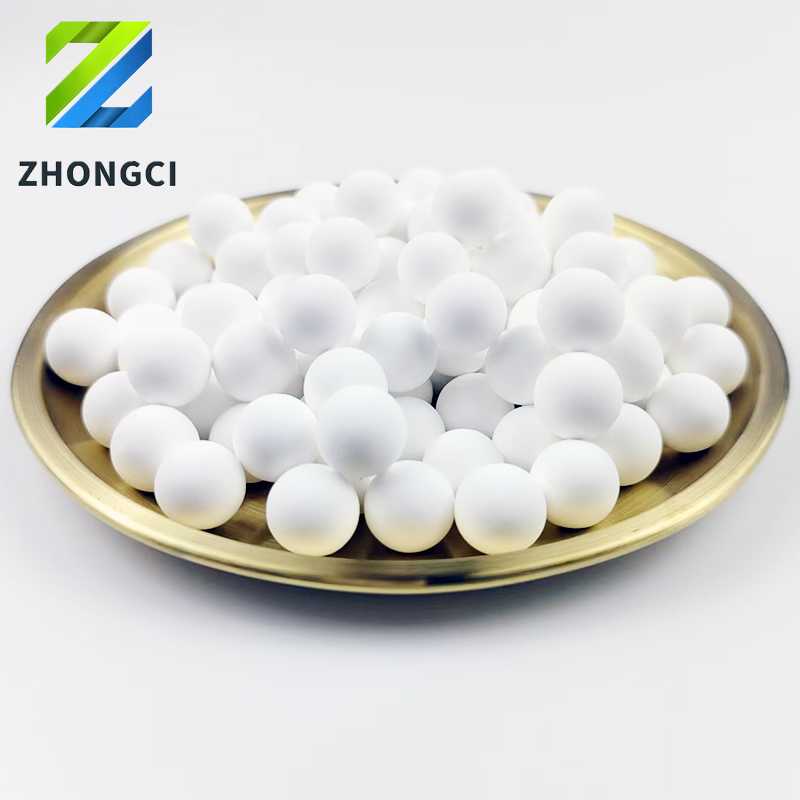
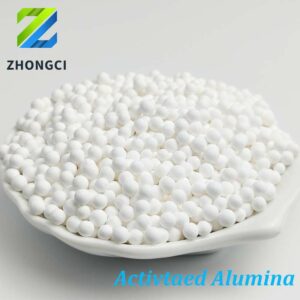
Activated alumina balls, also known as activated bauxite, with the English name “Activated alumina”, is a widely – use inorganic chemical product in the world.
Physical and Chemical Properties
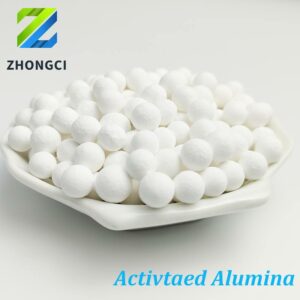
It is a porous and highly disperse solid material with a large surface area. The spherical activated alumina as transformer oil adsorbent is in the form of white spherical porous particles. These particles have uniform particle size, smooth surface, high mechanical strength, and strong hygroscopicity. After absorbing water, they do not swell, crack and remain in their original shape. It is non – toxic, odorless, insoluble in water and ethanol, but can slowly dissolve in concentrated sulfuric acid. The pure activated alumina is a white amorphous powder, with a density of 3.9 – 4.0 g/cm³, a melting point of 2050°C and a boiling point of 2980°C.
Structural Features
In terms of crystal structure, activated alumina mainly exists in metastable forms such as γ – Al₂O₃. The α – Al₂O₃ is the most stable form of alumina but does not have the chemically active surface, so it is not as an adsorbent. Activated alumina has a high specific surface area. By reasonably controlling the calcination system, the specific surface area of activated alumina can reach up to 360 m²/g. Using the colloidal aluminum hydroxide obtained from the decomposition of NaAlO₂ as the raw material, the prepared activated alumina has very fine pore sizes, and the specific surface area can be as high as 600 m²/g. Also, its pore – size structure is adjustable. Different pore – size products can be prepared by using different raw materials and adding certain organic substances during the preparation process.
Main Applications
Catalyst and Catalyst Carrier
In the field of catalysis, activated alumina is commonly as a catalyst and catalyst carrier. Its microporous surface has the characteristics required for catalytic action, such as adsorption performance, surface activity, and excellent thermal stability, which are widely use in chemical reaction processes.
Adsorbent
- Drying Agent: It has a selective adsorption ability for the moisture of gases, water vapor and some liquids. When as a drying agent, when the air passes through its fine channels, water molecules in the air adhere to the alumina, and the air becomes dry. After the adsorption is saturate, it can be at about 175 – 315°C to remove water and be regenerative. This adsorption – regeneration process can be multiple times. It can be for the drying of gases in industries such as oxygen production, textile, electronics, and can also be as a desiccant in the fertilizer and petrochemical industries. It is a high – efficiency desiccant for deep drying of trace water and is very suitable for heatless regeneration devices.
- Removal of Pollutants: It can adsorb the vapor of lubricating oil from polluted oxygen, hydrogen, carbon dioxide, natural gas, etc. It can also be as an adsorbent for gas purification, an agent for removing the color and odor of industrial sewage, and a selective adsorbent for many chemicals (including arsenic and fluoride). In particular, it has a strong adsorption capacity for fluoride and is mainly for defluorination of drinking water in high – fluoride areas. It can be used in conjunction with household defluorination cylinders, water treatment plants’ defluorination devices or industrial defluorination devices .
Other Applications
It can be used in the refining of metallic aluminum and is also a raw material for making crucibles, porcelain, refractory materials and artificial gems. In the ingredients of amorphous refractory materials, high – performance activated alumina can increase the density, fluidity and strength of the green body, increase the amount of secondary mullite formation, and reduce the water addition and porosity .
In conclusion, activated alumina plays an important role in various fields due to its unique physical and chemical properties and diverse functions.
评价
目前还没有评价