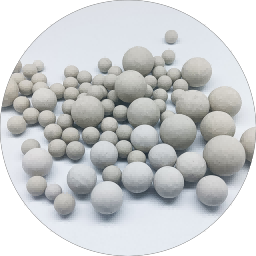
Low alumina inert ceramic balls are a type of industrial ceramic product characterized by their low alumina content, typically ranging from 60% to 80% . They are primarily used as support and covering materials in industrial reactors, offering stability and protection to catalysts in various chemical processes.
Key Properties and Advantages
- Chemical and Thermal Stability: These balls exhibit high resistance to acids, alkalis, salts, and organic solvents, making them suitable for harsh environments. They also withstand high temperatures and thermal shocks, ensuring durability in extreme conditions.
- Mechanical Strength: With sufficient crushing strength, they maintain structural integrity under pressure, preventing breakage during operation.
- Cost-Effectiveness: Compared to high alumina variants (e.g., 90%+ alumina content), low alumina ceramic balls are more affordable, making them a preferred choice for large-scale industrial applications.
Applications
Low alumina inert ceramic balls are widely utilized in:
- Oil Refining and Petrochemical Industries: As catalyst bed supports in reactors to buffer fluid impact and improve gas/liquid distribution.
- Chemical and Fertilizer Production: Protecting catalysts from erosion and ensuring uniform reactant flow.
- Environmental Protection: Supporting materials in wastewater treatment and gas purification systems.
Technical Specifications
- Size Range: Typically available from 1mm to 60mm in diameter, with common sizes including 3mm, 6mm, 10mm, and 25mm.
- Implementation Standard: Complies with HG/T 3683.1-2000, an industrial ceramics standard for inert ceramic balls.
- Bulk Density: Varies based on alumina content and manufacturing processes, provided for reference rather than as a strict acceptance criterion.
Manufacturing and Suppliers
These balls are produced through processes like raw material blending, molding, drying, and firing. Suppliers include manufacturers listed on platforms such as ChemicalBook and industrial trading websites, with a focus on enterprises adhering to quality standards.
For specific product inquiries, contact suppliers specializing in industrial ceramics to obtain detailed pricing and technical data.