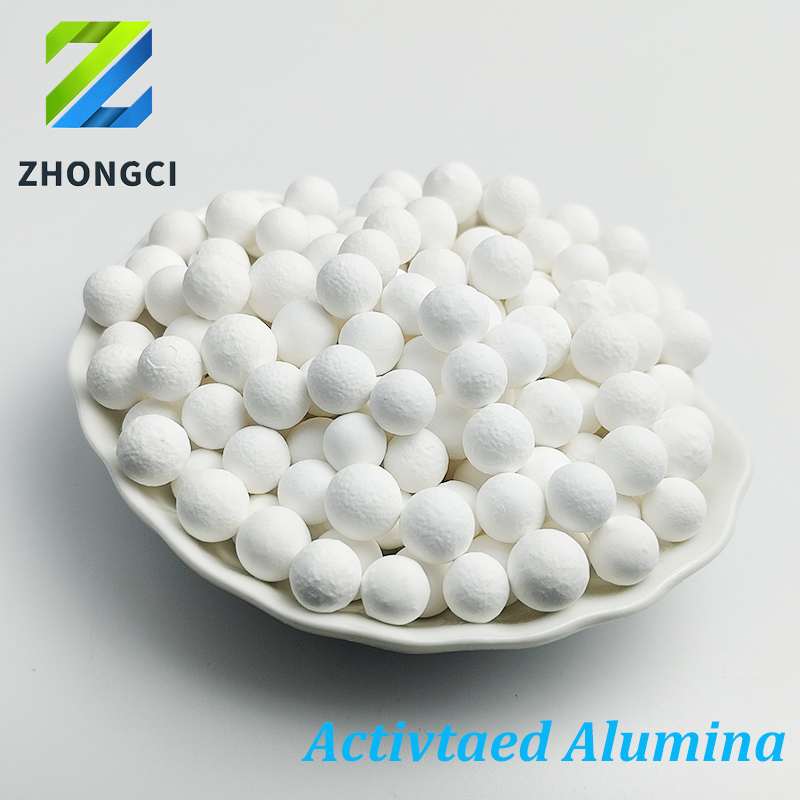
Titanium-modified activated alumina is a composite material by introducing titanium oxide (TiO₂) as a modifying component into alumina (Al₂O₃). It combines the advantages of alumina’s high specific surface area and large pore volume with titanium oxide’s good acidity, coke resistance, and poisoning resistance, making it a promising material in various fields.
Preparation Methods and Technical Improvements
Traditional preparation methods of titanium-modified alumina often involve using organic templates. For example, some methods prepare macroporous polymer foam templates through emulsion polymerization, then fill them with alumina precursors and titanium sources, and finally remove the templates by calcination. However, these methods have drawbacks such as the use of toxic organic monomers (like styrene and acrylamide),preparation processes, high costs, environmental pollution caused by emissions during template removal, and low mechanical strength of the resulting materials.
A novel preparation method of an integral titanium-modified alumina material has developed, which does not require the addition of organic templates. This method simplifies the preparation process, is environmentally friendly, and is easy for industrial production. The resulting material has a honeycomb structure with macro and micro macroporous structures, and titanium uniformly dispersed in the alumina matrix in the form of titanium dioxide with a sub-cluster size greater than 0.5 nm and below 3 nm.
Properties and Advantages
- Combined Properties: It has high specific surface area and large pore volume from alumina, as well as good acidity, coke resistance, and poisoning resistance from titanium oxide.
- Structural Characteristics: The integral titanium-modified alumina material can have micron-sized interconnected macroporous channels with pore sizes ranging from 1 μm to 50 μm.
- Chemical Stability: The material exhibits good chemical stability, which is beneficial for its application in various chemical environments.
Applications
- Catalytic Field: It widely used as a catalyst or catalyst carrier. For example, catalysts prepared using AL₂O₃-TiO₂ composite oxides can significantly improve hydrogenation and hydrocracking performance, with higher hydrodesulfurization activity. It is also in sulfur recovery catalysts, methanation catalysts, etc.
- Adsorption Field: Similar to activated alumina, it can be used as an adsorbent for the removal of certain substances. Although not specifically mentioned in the references, based on its properties, it may have potential applications in selective adsorption processes.
- Medical Field: Titanium oxide coatings prepared by techniques like atmospheric plasma spraying on medical titanium alloys are related, and titanium-modified alumina may have potential in medical materials due to its biocompatibility and other properties.
Conclusion
Titanium-modified activated alumina, with its excellent comprehensive properties and diverse applications, has attracted increasing attention. The development of new environmentally friendly preparation methods and further exploration of its application fields will promote its wider use in industry and other fields.