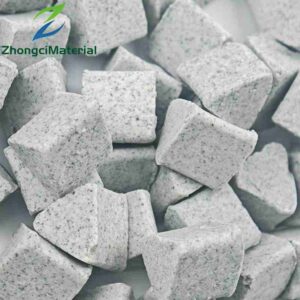
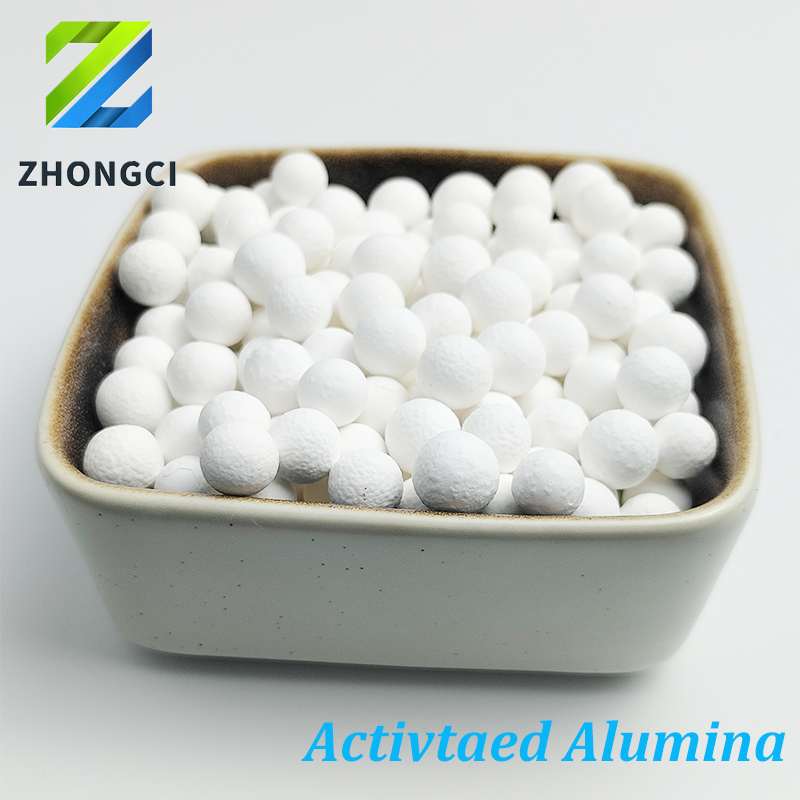
Macroporous activated alumina is a type of functional material with a porous structure and high specific surface area. It widely used in various industrial fields due to its excellent adsorption performance, catalytic activity, and thermal stability . This material is typically through processes such as calcination and activation of aluminum hydroxide, resulting in a white spherical or granular form with uniform pore distribution.
Key Properties of Macroporous Activated Alumina
- High Specific Surface Area and Porosity: The material exhibits a large specific surface area and well-developed macroporous structure, providing abundant active sites for adsorption and catalytic reactions.
- Mechanical Strength and Stability: It has high mechanical strength, low wear rate, and excellent thermal stability, ensuring long-term performance in harsh operating conditions .
- Selective Adsorption Capacity: Macroporous activated alumina shows strong adsorption affinity for polar molecules such as water vapor, making it an ideal desiccant. It also demonstrates effective adsorption of fluoride ions in water treatment applications .
- Catalytic Activity: As a catalyst or catalyst support, it facilitates various chemical reactions by providing a stable platform for active components and enhancing mass transfer efficiency.
Applications of Macroporous Activated Alumina
- Catalyst and Catalyst Support
- Industrial Catalysis: Widely used in petrochemical, fertilizer, and organic chemical industries as a support for catalysts. For example, it serves as a carrier for nickel-based catalysts in CO₂ methanation reactions, improving catalytic activity and stability .
- Environmental Catalysis: Applied in air purification and wastewater treatment processes to promote degradation of pollutants .
- Desiccant and Adsorbent
- Gas and Liquid Drying: Effectively removes moisture from gases (e.g., oxygen, hydrogen, natural gas) and liquids in petroleum refining, textile, and electronics industries .Water Treatment: Utilized for fluoride removal in drinking water, especially in high-fluoride areas. It regenerated and reused multiple times .
- Other Industrial Uses
- Ceramic Materials: Used in the production of alumina ceramics for electronics, automotive, and aerospace applications due to its excellent mechanical properties.
- Refractory Materials: Enhances the density and strength of refractory products when added as a component.
Preparation and Regeneration
- Preparation Process: Involves steps such as batching, grinding, calcination, activation, and forming. The calcination temperature and activation conditions significantly influence the material’s properties.
- Regeneration Method: Adsorption-saturated alumina can be regenerated by heating at 175-315°C to remove adsorbed moisture. For fluoride removal applications, chemical regeneration using aluminum sulfate solution or acid treatment is employed.
Macroporous activated alumina continues to play a crucial role in advancing industrial processes and environmental protection, thanks to its versatile properties and sustainable applications. Ongoing research focuses on optimizing its structure and performance for emerging fields such as energy storage and environmental remediation.