CMS-H is a type of carbon molecular sieve (CMS), a new type of adsorbent developed in the 1970s. It is an excellent non-polar carbon material. As a carbon adsorbenta porous substance composed of carbon, with a pore structure model of disordered stacked carbon structure. Its important property is based on its microporous structure.
Working Principle of CMS-H
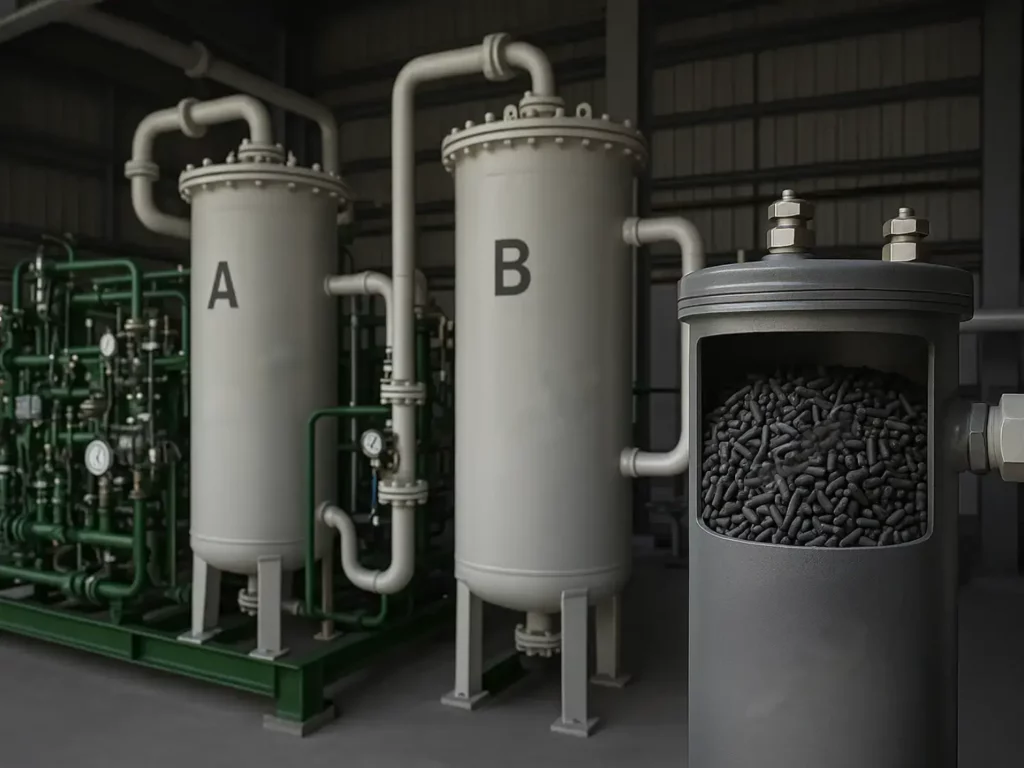
The ability of CMS-H to separate air depends on the different diffusion rates of various gases in the air through the micropores of the carbon molecular sieve, different adsorption forces, or the simultaneous action of both effects. Under equilibrium conditions, the adsorption capacities of carbon molecular sieve for oxygen and nitrogen are quite close, but the diffusion rate of oxygen molecules through the narrow gaps of the CMS-H micropore system is much faster than that of nitrogen molecules. Therefore, based on this performance, nitrogen separated from the air through the PSA (Pressure Swing Adsorption) process before reaching equilibrium conditions.
The micropore size is the basis for CMS-H to separate oxygen and nitrogen. The internal micropore distribution of CMS-H should be in the range of 0.28 – 0.38 nm. Within this micropore size range, oxygen can quickly diffuse into the pores through the micropore openings, while nitrogen has difficulty passing through, thereby achieving oxygen – nitrogen separation. If the pore size is too large, both oxygen and nitrogen can easily enter the micropores, and if the pore size is too small, neither oxygen nor nitrogen can enter, so the pore size control is crucial.
Application Fields of CMS-H
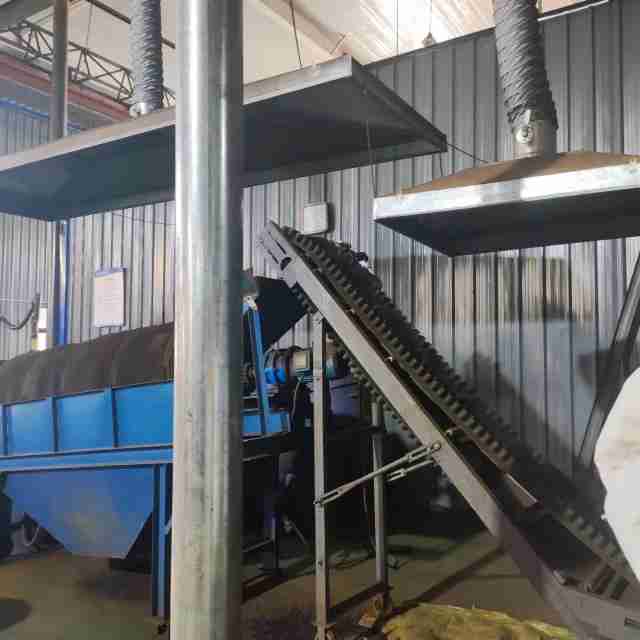
CMS-H is used for separating air to enrich nitrogen, and the nitrogen produced widely used in chemical industry, oil and gas industry, electronics industry, food industry, coal industry, pharmaceutical industry, cable industry, metal heat treatment, transportation and storage, etc.
Market Situation of CMS-H Related Carbon Molecular Sieves
It is predicted that the global carbon molecular sieve market size will reach 230 million US dollars by 2029, with a compound annual growth rate (CAGR) of 5.8% in the next few years. Major global manufacturers of carbon molecular sieves include Osaka Gas Chemical. In 2022, the top four global manufacturers accounted for approximately 64.0% of the market share. With the continuous expansion of the application range of pressure swing adsorption nitrogen generators, the demand for carbon molecular sieves is increasing, which will further promote the development of the industry. At the same time, with the improvement of application depth, the requirements for indicators such as nitrogen production, nitrogen recovery rate, bulk density, and compressive strength of carbon molecular sieves are getting higher and higher.