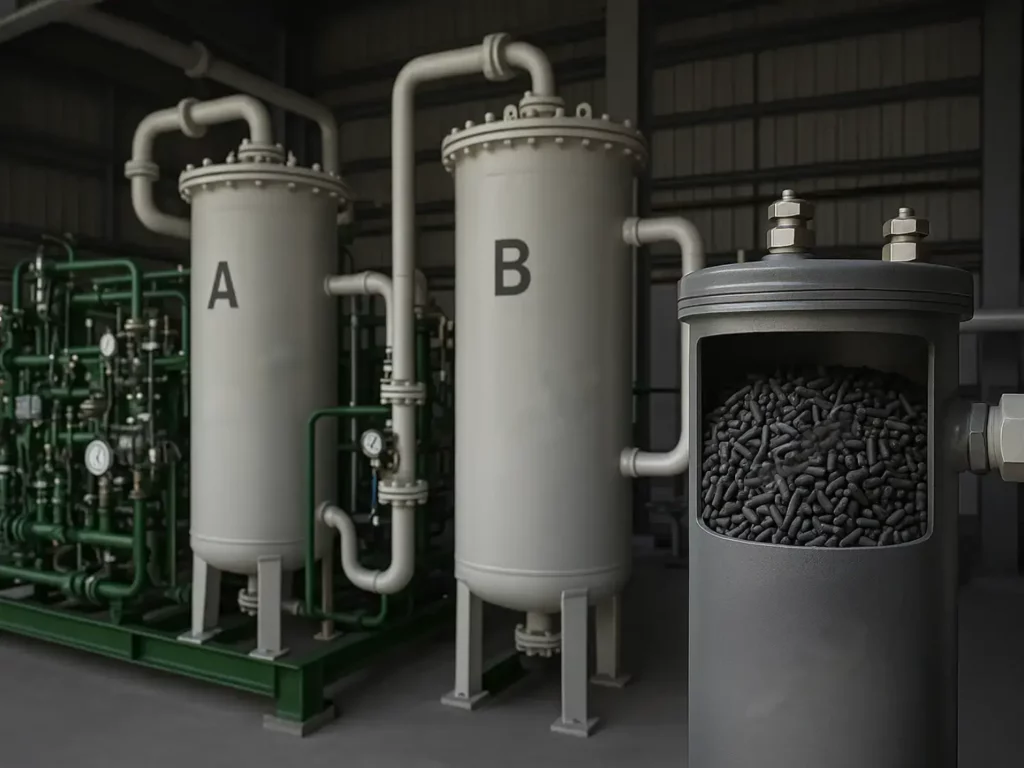
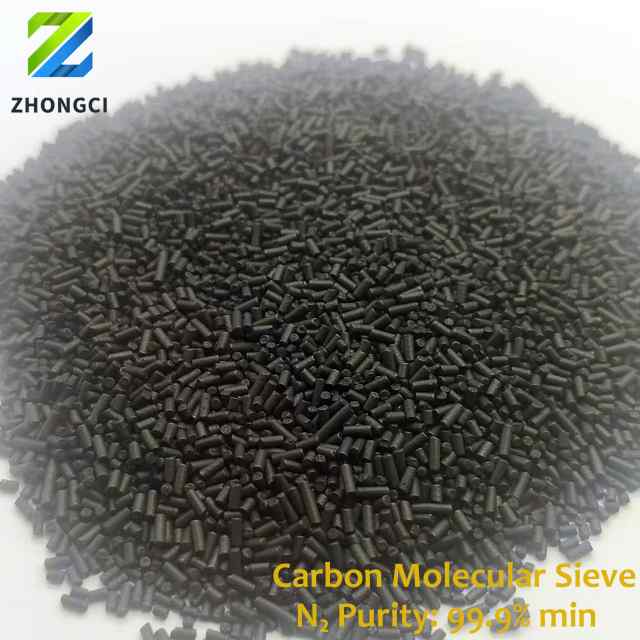
Carbon Molecular Sieve (CMS) is a new type of adsorbent in the 1970s. It is an excellent non-polar carbon material. CMS-F, as a type of carbon molecular sieve, mainly used for separating air to enrich nitrogen under normal temperature and pressure swing conditions.
Characteristics of CMS-F Carbon Molecular Sieve
- Structure: It is a porous material compose of carbon with a disordered stacked carbon structure as the pore structure model. Its important property is based on its microporous structure.
- Adsorption Performance: It has the performance of adsorbing oxygen molecules in the air under normal temperature and pressure swing. The separation ability of air depends on the different diffusion rates of various gases in the air in the micropores of the carbon molecular sieve, different adsorption forces, or the simultaneous action of both effects. Under equilibrium conditions, the adsorption capacities of carbon molecular sieve for oxygen and nitrogen are quite close, but the diffusion rate of oxygen molecules through the narrow gaps of the carbon molecular sieve micro-pore system is much faster than that of nitrogen molecules.
- Physical Parameters: Generally, it has parameters such as particle diameter, bulk density, adsorption cycle, compressive strength, etc. For example, some similar products have a particle diameter ranging from 1.0 to 1.8mm, a bulk density of 630 – 700g/l, an adsorption cycle of 2×60S, and a compressive strength of ≥100N/particle.
Advantages of CMS-F Carbon Molecular Sieve Compared with Traditional Nitrogen Production Process
Compared with the traditional cryogenic high-pressure nitrogen production process, using CMS-F carbon molecular sieves for nitrogen production has the advantages of less investment cost, fast nitrogen production speed, and low nitrogen cost. Therefore, it is the preferred pressure swing adsorption (PSA) air separation nitrogen enrichment adsorbent in the engineering field.
Application Fields of CMS-F Carbon Molecular Sieve
The nitrogen produced by CMS-F carbon molecular sieves widely used in chemical industry, oil and gas industry, electronics industry, food industry, coal industry, pharmaceutical industry, cable industry, metal heat treatment, transportation and storage, etc.
Usage Precautions of CMS-F Carbon Molecular Sieve
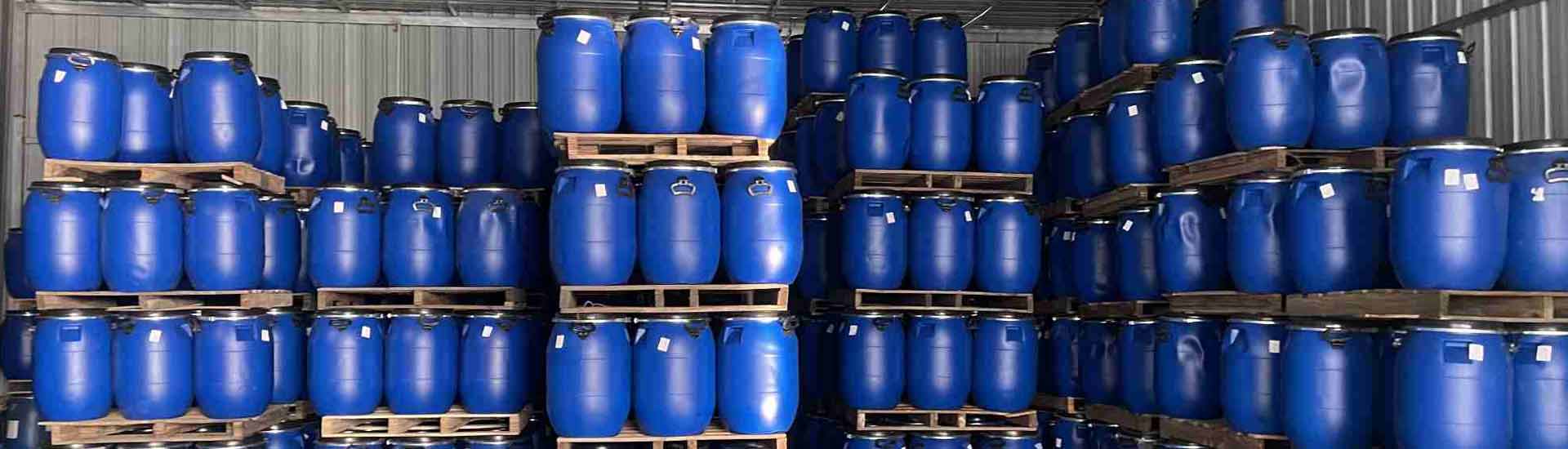
- Storage: It stored in a low-temperature, dry and sealed environment.
- Operation Temperature: A lower adsorption temperature is beneficial to the performance of the carbon molecular sieve. Moreover, If conditions permit, reducing the adsorption temperature can better demonstrate its excellent nitrogen production performance.
- Operation Pressure: Considering factors such as adsorption capacity and air compressor selection, for the atmospheric regeneration process, the adsorption pressure recommended to be 5 – 8Kg/cm²; for the vacuum regeneration process, the adsorption pressure recommended to be 3 – 5Kg/cm².
- Adsorption Time: The adsorption time generally selected as 30 – 120 seconds. Small high-purity nitrogen generators recommend a short gas production time, and large low-concentration ones recommend a long gas production time.