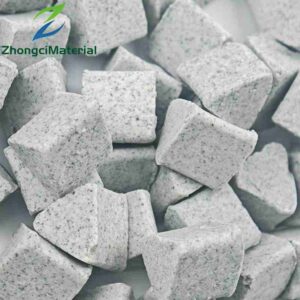

Claus catalysts are essential materials in industrial chemical processes, primarily designed to facilitate the conversion of hydrogen sulfide (H₂S) into elemental sulfur, a critical step in environmental protection and resource recovery. Developed based on the Claus process invented by British chemist C.F. Claus in 1883, these catalysts play a pivotal role in sulfur recovery from acidic gases generated in petroleum refining, natural gas processing, and industries.
Composition and Structure
The effectiveness of Claus catalysts stems from their carefully engineered composition, which includes:
- Support Material: Aluminum (typically alumina, Al₂O₃) serves as the primary carrier, providing structural stability and a high surface area to enhance catalytic activity.
- Active Components: Precious metals such as platinum (Pt) and palladium (Pd) are integrated to boost reaction efficiency and selectivity, ensuring targeted conversion of H₂S and SO₂ into sulfur.
- Promoters: Manganese (Mn) acts as a promoter, accelerating reaction kinetics and maintaining long-term catalytic stability.
Advanced formulations, such as the K-102A catalyst, may include additional components like sodium oxide (Na₂O) and iron oxide (Fe₂O₃) to optimize performance under specific industrial conditions.
Working Mechanism
Claus catalysts drive two key reactions in sulfur recovery:
- High-Temperature Combustion: In the furnace, one-third of H₂S is oxidized to SO₂ at ~1200°C:
2H2S+3O2→2SO2+2H2O2H2S+3O2→2SO2+2H2O - Catalytic Conversion: In fixed-bed reactors (converters) at 220–300°C, unreacted H₂S reacts with SO₂ over the catalyst to form elemental sulfur:
2H2S+SO2→3xSx+2H2O2H2S+SO2→x3Sx+2H2O (where SxSx denotes sulfur molecules like S₈).
The catalyst also promotes hydrolysis of organic sulfides (e.g., COS, CS₂) into H₂S, further improving sulfur recovery efficiency.
Key Functions
- Enhanced Reaction Rates: Accelerates H₂S/SO₂ conversion, increasing sulfur yield.
- Selectivity: Minimizes by-products, ensuring sulfur purity up to 99.8%.
- Energy Efficiency: Reduces required reaction temperatures and pressures, lowering operational costs.
- Stability: Prolongs service life under harsh industrial conditions, with multi-stage converters achieving sulfur recovery rates of 93–97%.
Preparation Methods
Common synthesis techniques include:
- Sol-Gel Method: Involves sol formation, gelation, drying, and calcination, yielding uniform, high-surface-area catalysts.
- Co-Precipitation/Composite Precipitation: Enables precise control over component distribution, ideal for large-scale production.
Applications
Claus catalysts are indispensable in:
- Petroleum Refining: Treating acidic gases from hydrodesulfurization units.
- Natural Gas Processing: Removing H₂S from raw natural gas
- Environmental Protection: Reducing SO₂ emissions to comply with regulations (e.g., limiting tailpipe SO₂ to <300 ppm)
Conclusion
Claus catalysts are cornerstones of sustainable industrial chemistry, balancing resource recovery and environmental stewardship. Through continuous advancements in materials science—such as the development of silica-supported second-generation catalysts with lower activation temperatures—their role in clean energy and circular economy initiatives will only grow