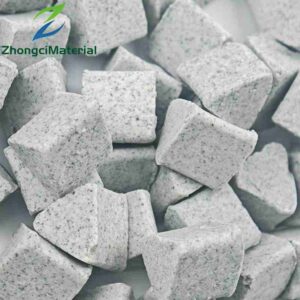
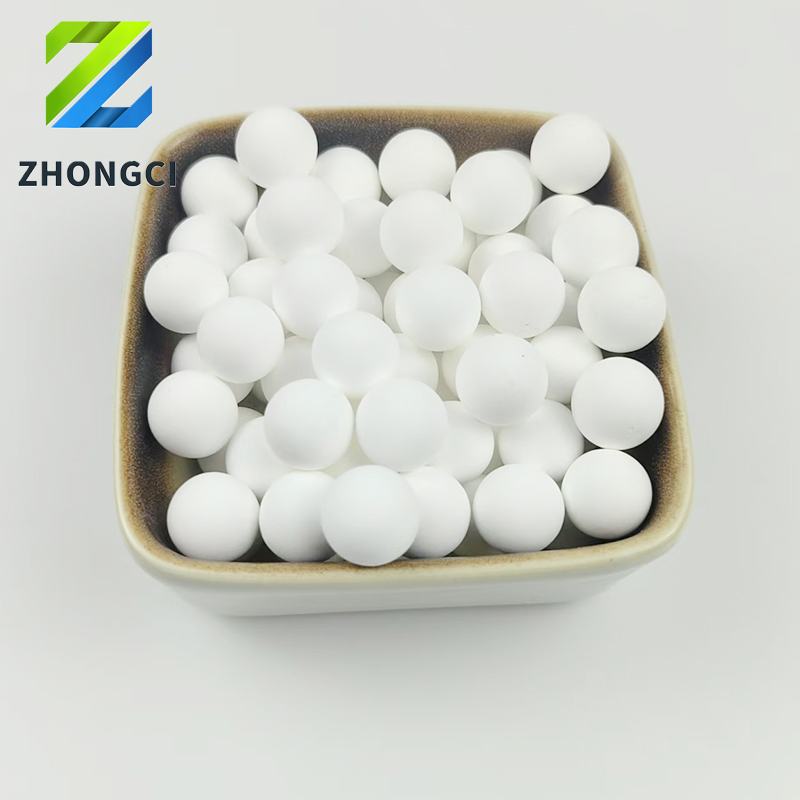
Ceramic ball packing is a type of ceramic product with a wide range of applications. It can be divided into packing ceramic balls and grinding ceramic balls according to their functions. Among them, packing ceramic balls are widely used in petroleum, chemical, fertilizer, natural gas, and environmental protection industries as covering and supporting materials for catalysts in reactors and tower packing.
Classification of Packing Ceramic Balls
Packing ceramic balls have a variety of types, each with its own characteristics and applicable scenarios:
- Inert Alumina Ceramic Balls: They are a common type of packing ceramic ball with good chemical stability and mechanical strength.
- Open-Pore Ceramic Balls: Developed on the basis of inert alumina ceramic balls, they have a certain mechanical strength, chemical stability, and thermal stability, while increasing the specific surface area and porosity, thereby enhancing the dispersion and flux of materials .
- Concave-Convex Ceramic Balls: Their unique concave-convex structure helps to improve the distribution of gas or liquid.
- Pineapple Ceramic Balls (Watermelon Ceramic Balls): With a special appearance, they can also increase the distribution points of gas or liquid.
- Active Ceramic Balls: May have some catalytic activity or adsorption capacity.
- Microporous Ceramic Balls: Have microporous structures, which can provide more reaction sites.
- Heat Storage Ceramic Balls: Mainly used for heat storage purposes.
Characteristics of Packing Ceramic Balls
Packing ceramic balls possess a series of excellent properties that make them play an important role in various industrial fields:
- High Temperature and High Pressure Resistance: They can withstand high temperatures and pressures in industrial production processes.
- Low Water Absorption: This ensures their performance stability in humid environments.
- Good Chemical Stability: They are resistant to corrosion by acids, alkalis, and other organic solvents and will not chemically react with materials.
- Thermal Shock Stability: Can withstand temperature changes during production.
- Long Service Life: Due to their good mechanical strength and wear resistance, they have a long usage period.
Functions and Application Fields of Packing Ceramic Balls
Functions of Packing Ceramic Balls
The main function of packing ceramic balls is to increase the distribution points of gas or liquid, support and protect active catalysts with low strength. They can play roles such as protecting, buffering, and filtering catalysts.
Application Fields of Packing Ceramic Ball
Packing ceramic balls are mainly used in various reactors and adsorbers in petroleum, chemical, fertilizer, environmental protection, and other industries, such as refineries, alkylbenzene plants, aromatic hydrocarbon plants, natural gas plants, fertilizer plants, methanol plants, and synthetic ammonia plants. Specifically, they are used in reformers, reaction furnaces, packed towers in the chemical industry to prevent filtered silica from covering equipment or forming dirt or damaging catalyst carriers; also commonly used in high and low-temperature shift furnaces, reformers, hydrogenation converters, desulfurization tanks, and methane reformers in fertilizer plants, as well as hot blast stoves and heating conversion equipment in the iron and steel industry.
Advantages of Packing Ceramic Ball
Since high-quality ceramic raw materials and advanced production processes and equipment are adopted, the performance and effect of packing ceramic balls can be comparable to imported products, and some technical indicators are even higher than similar foreign products. This makes them have significant advantages in terms of performance and cost-effectiveness, and are favored by users in various industries.