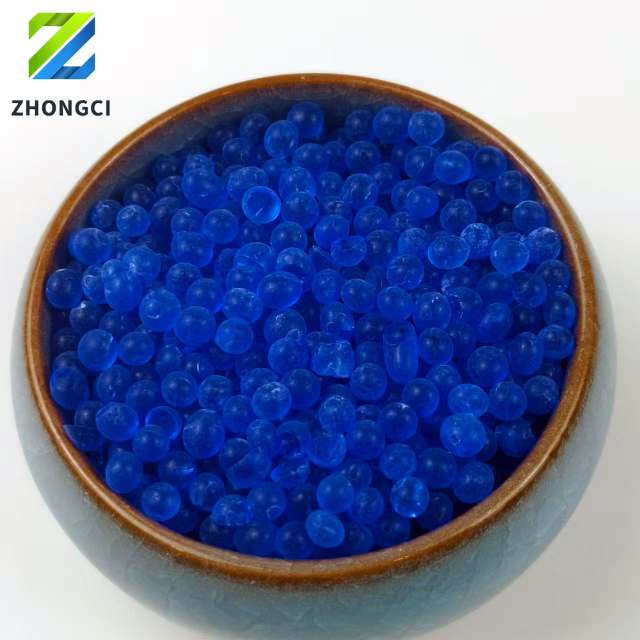
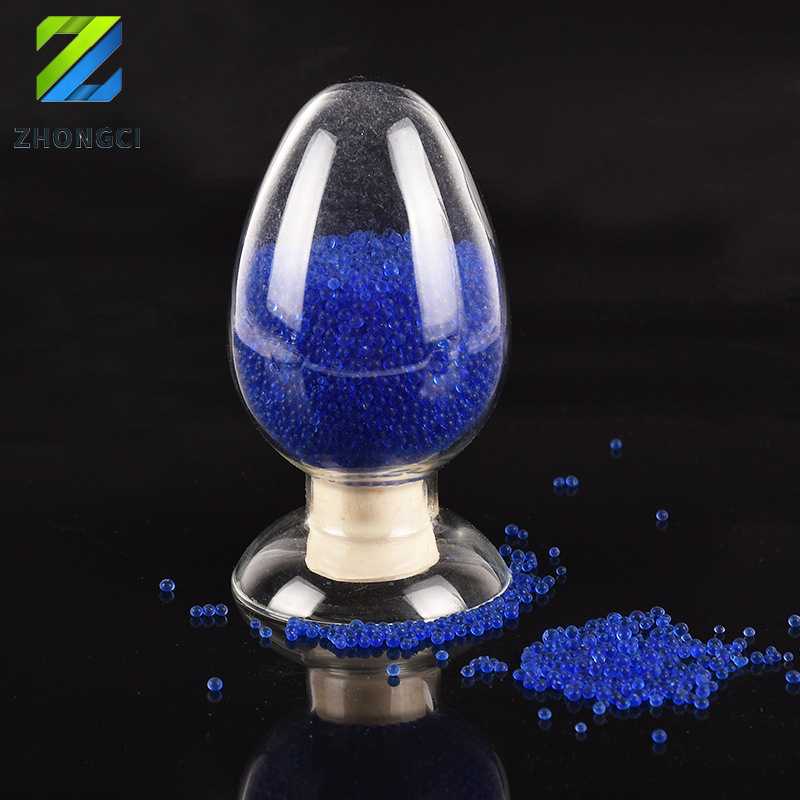
Blue silica gel a widely used desiccant known for its moisture-absorbing properties and visual humidity indication. It is a form of amorphous silicon dioxide (SiO₂), chemically similar to regular silica gel but specially treated with a moisture-sensitive indicator—typically cobalt chloride—which gives it a distinctive blue color when dry.
Key Properties and Characteristics
- Chemical Composition: The base material is amorphous silica gel, with the chemical formula SiO₂. The blue color comes from cobalt chloride (CoCl₂), which changes color depending on moisture levels.
- Color Indication: When the gel is dry and fully active, it appears deep blue. As it absorbs moisture, the color gradually shifts to pink or purple, providing a clear visual signal that the desiccant saturated and needs regeneration or replacement.
- Physical Form: Available in granular or bead form, often spherical, with high surface area and porosity, enhancing its adsorption capacity.
- Density: Approximately 2.6 g/cm³.
- Melting Point: Around 1610°C.
- Boiling Point: Approximately 2230°C.
- Water Solubility: Insoluble in water.
- pH (10% suspension): ~6.8.
- Storage Conditions: Recommended to store at 2–8°C to maintain stability.
Functions and Applications
Blue silica gel primarily used as a humidity indicator desiccant in packaging and industrial applications where monitoring moisture levels is critical:
- Moisture Control: Used to protect moisture-sensitive items such as electronics, pharmaceuticals, precision instruments, and optical devices during storage and transport.
- Visual Monitoring: Its color-changing property allows users to easily determine the effectiveness of the desiccant without testing equipment.
- Regenerable: Once saturated, blue silica gel reactivated by heating (typically at 120–150°C for several hours), driving off absorbed moisture and restoring its blue color and drying capacity.
- Industrial Use: Applied in gas drying, air purification systems, and fermentation processes where moisture strictly controlled.
Safety and Handling
Due to the presence of cobalt chloride, which is classified as a potential carcinogen and environmental hazard, blue silica gel is being phased out in some applications, especially in consumer products. Safer alternatives, such as orange silica gel (using non-toxic indicators like methyl violet), are increasingly preferred.
Despite its effectiveness, proper handling and disposal are essential to minimize health and environmental risks.
Conclusion
Blue silica gel remains a valuable tool in moisture-sensitive environments due to its dual function as a desiccant and humidity indicator. While its use is declining in some regions due to safety concerns, it continues to serve in industrial and controlled settings where visual moisture detection is crucial.