
Argon Purification Molecular Sieves
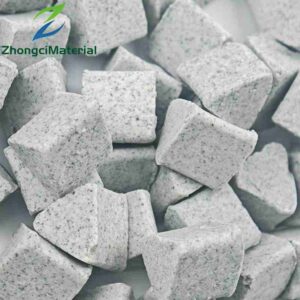
Molecular sieves are highly effective adsorbents crucial for achieving ultra-high purity argon (Ar). Particularly in demanding applications like liquid argon time projection chambers (LArTPCs) used in particle physics. These materials are crystalline, porous solids (typically aluminosilicates) with uniform pore sizes. This can selectively adsorb molecules based on size and polarity.
- Critical Role in High-Purity Argon Systems: Future giant LArTPCs require argon purity levels better than 0.1 parts per billion (ppb) . This can prevent the capture of ionized electrons by electronegative impurities (like O₂, H₂O, N₂, CO₂) during drift. Molecular sieves are a key technology enabling the removal of these contaminants to reach such stringent specifications.
- Superior Adsorption Performance: Studies have quantified the superiority of molecular sieves over alternative purification materials like anhydrous complexes. Specifically, molecular sieves demonstrate significantly better efficacy in absorbing argon gas (Ar), nitrogen gas (N₂). And water vapour (H₂O), as confirmed by BET isotherm analysis. This makes them ideal for handling common impurities found in argon supplies.
- Key Advantages: Molecular sieves offer several distinct benefits for argon purification:
- Excellent Adsorbability: High capacity for trapping target impurity molecules within their porous structure.
- Good Regenerability: They thermally regenerated (desorbing trapped impurities) multiple times without significant degradation, allowing for long-term, cost-effective use. This is essential for continuous or recirculating purification systems.
- High Thermal Stability: They maintain their structural integrity and adsorption capacity even at cryogenic temperatures relevant to liquid argon systems (down to at least -130°C).
- Selectivity: Pore size can be (e.g., 3Å, 4Å, 5Å) to target specific impurities like H₂O (highly detrimental to scintillation light) or O₂.
- Application in Argon Purification Systems: Molecular sieves typically housed within purification cartridges. These cartridges integrated into argon gas handling systems. A notable example is a novel, highly scalable liquid argon re-circulation system developed for LArTPC research. This system utilizes a motorized bellows pump operating in liquid and a purification cartridge containing molecular sieves. Such systems achieve high flow rates (e.g., 27 litres/hour) and maintain the necessary ultra-high purity through continuous recirculation and adsorption . Molecular sieves are also fundamental components in specialized equipment like molecular sieve adsorption pumps .
- Operational Context: Their efficiency in removing critical impurities like O₂ and H₂O from argon gas streams (e.g., at 1 bar and temperatures ranging from room temperature down to -130°C) investigated and found to be high . This performance across a relevant temperature range is vital for applications involving both gaseous and liquid argon.
In summary, argon purification molecular sieves are indispensable materials for achieving and maintaining the extreme purity levels required in advanced scientific and industrial applications. Their proven high adsorption capacity, selectivity for key contaminants, regenerability, thermal stability, and successful integration into scalable recirculation systems make them the preferred choice for ultrapure argon production and maintenance.