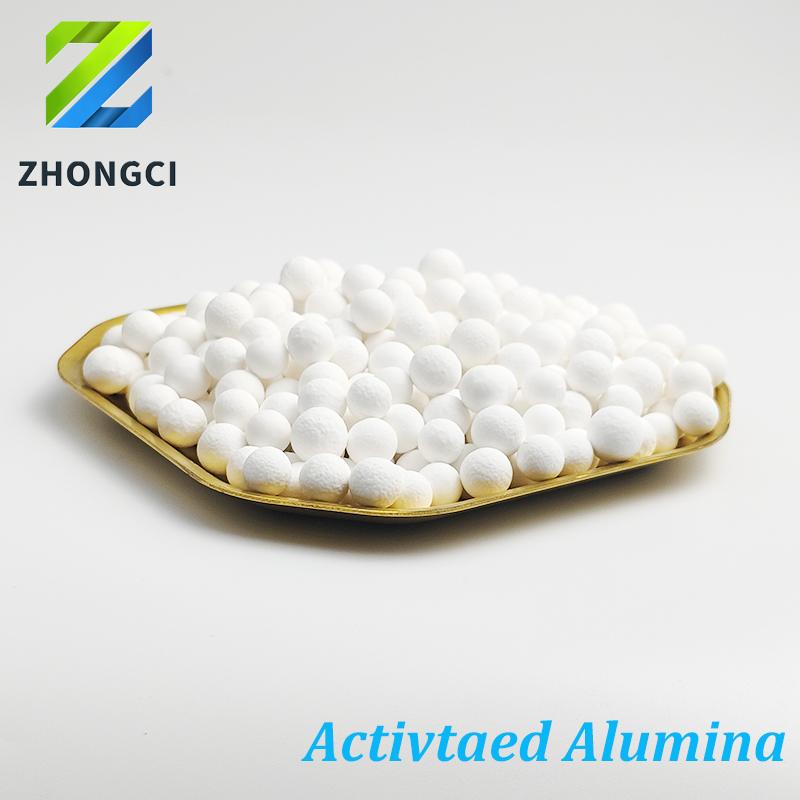
Activated aluminum oxide, also known as activated alumina, is a porous and highly adsorptive material derived from aluminum oxide (Al₂O₃). It is typically produced by heating natural bauxite (with active component Al₂O₃·3H₂O) to remove adsorbed water, resulting in a structure with high surface area and adsorption capacity. This material exhibits excellent chemical stability and is widely used in various industrial and scientific applications.
Key Properties and Specifications
- Physical Appearance: White particles.
- Chemical Formula: Al₂O₃.
- CAS Number: 1344-28-1 (as referenced for basic activated aluminum oxide).
- Storage Condition: Recommended to be stored at room temperature (10-30°C).
- Porous Structure: Features a self-organized, nano-porous array, making it suitable for template synthesis and adsorption applications.
Applications
- Adsorption and Purification: Used as a fluorine-removal agent in water treatment, with studies focusing on its adsorption efficiency and regeneration performance. It also enhances the quality of soybean lecithin through adsorption.
- Chemical Analysis: Applied in EDTA indirect titrimetric determination of aluminum oxide in ores and atomic absorption spectrophotometry for sodium oxide content analysis.
- Material Science: Serves as a template for fabricating nanostructures like aligned carbon nanorod arrays, and as a buffer layer to improve the properties of ZnO thin films.
- Industrial Processes: A critical component in Bayer process for aluminum production, where it influences red mud slurry flocculation.
Synthesis and Modification
- Preparation Methods: Includes constant current density anodization to create patterned anodic aluminum oxide templates and calcination of coal gangue with additives to enhance alumina extraction efficiency.
- Surface Modification: Doping with silver ions for bactericidal applications, such as in high surface area.
Conclusion
Activated aluminum oxide’s versatility stems from its unique porous structure and high adsorption capacity, driving its use across environmental remediation, material synthesis, and industrial chemistry. Ongoing research continues to explore its potential in advanced nanotechnology and sustainable processes.