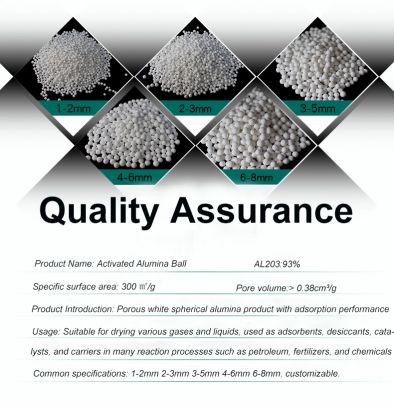
Activated alumina fluoride remover is a crucial product in the field of water treatment, especially for removing fluoride from water. This article will introduce its composition, properties, working principles, application scenarios, and advantages.
Composition and Properties
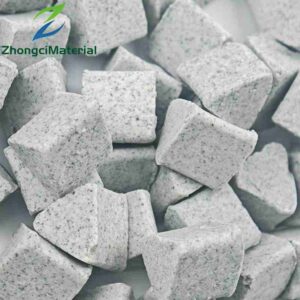
Activated alumina fluoride remover mainly composed of aluminum and oxygen, with the chemical formula Al₂O₃. It is a white spherical porous granular material, featuring uniform particle size, smooth surface, high mechanical strength, and strong hygroscopicity. After absorbing water, it remains unchanged in shape, neither swelling nor cracking. It is non – toxic, odorless, insoluble in water and organic solvents. The product typically has a large specific surface area (usually above 280 m²/g), and a large number of micropores, which provide a large contact area for the adsorption of fluoride ions.
Working Principles
There are two main mechanisms for activated alumina to remove fluoride ions: adsorption and ion exchange. When the pH of water is less than 9.5, activated alumina acts as an anion exchanger and has a great selectivity for fluoride. The amount of fluoride adsorbed per gram of activated alumina generally ranges from 1.2 to 4.5 mg, depending on factors such as the fluoride concentration of the raw water, pH value, and the particle size of activated alumina.
Application Scenarios
- Drinking Water Treatment: Fluoride pollution in water is a widespread global problem. Long – term consumption of water with high fluoride content can lead to fluorosis, affecting human health. Activated alumina fluoride remover can effectively reduce the fluoride content in drinking water to meet the national drinking water health standards.
- Industrial Water Treatment: It also used in industrial water treatment, such as in the petrochemical and fertilizer industries. It can be as a catalyst, catalyst carrier, and is also employed to remove the color and odor of industrial sewage.
Advantages
- High Adsorption Capacity: Due to its large specific surface area and abundant micropores, it has a strong adsorption capacity for fluoride ions, ensuring high – efficiency fluoride removal.
- Good Regenerability: After used, when the fluoride content in the effluent exceeds the standard, the activated alumina can regenerate. Usually, it first back – washed for 10 – 15 minutes with an expansion rate of 30 – 50% to remove suspended solids in the filter layer, and then further regenerated through specific methods, which can reduce usage costs.
- Wide Applicability: It used in different water treatment equipment, including fixed – bed and moving – bed filters. The size of the fluoride removal device can be determined according to the water volume, and it can be made of steel or fiberglass.
In conclusion, activated alumina fluoride remover is an efficient and reliable fluoride removal agent, which plays an important role in ensuring water safety and industrial production.