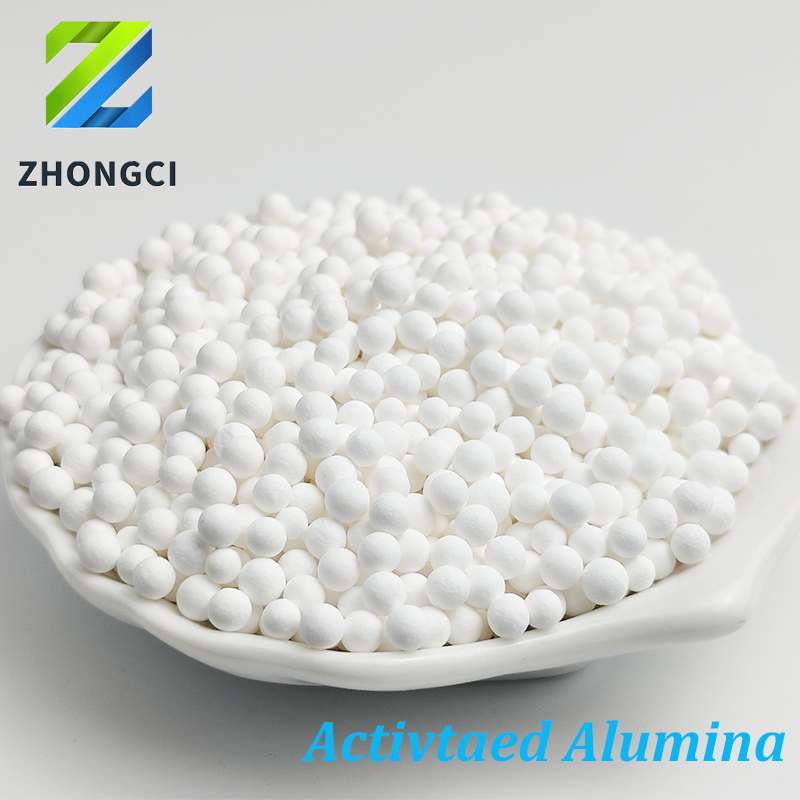
An activated alumina dryer is a device or material system that utilizes activated alumina as the core desiccant to remove moisture from gases or liquids. Activated alumina, a highly porous form of aluminum oxide (Al₂O₃), is produced by dehydrating hydrated alumina gel at 300–500°C, resulting in strong adsorption capabilities for water and gases. This makes it widely used in drying applications across industries such as petrochemicals, water treatment, and gas purification.
Key Properties of Activated Alumina
- High Adsorption Capacity: Its porous structure enables efficient moisture absorption, making it ideal for drying gases like oxygen and natural gas.
- Regenerability: After saturation, it can be regenerated by heating or purging with dry gas, restoring its desiccant properties for repeated use.
- Chemical Stability: It is nearly insoluble in water, organic solvents, acids, and alkalis, ensuring durability in harsh environments.
- Adjustable Activity: Moisture content regulates its activity (Brockmann scale I–V), allowing customization of adsorption strength for specific applications.
Applications
- Gas Drying: Used in oxygen concentrators and natural gas processing to remove water vapor.
- Water Treatment: Effective for defluoridation and arsenic removal in drinking water systems.
- Industrial Processes: Serves as a catalyst carrier in petrochemical reactions and a drying agent in solvent purification.
Operational Considerations
- Regeneration Conditions: Optimal regeneration typically requires temperatures above 150°C to desorb adsorbed moisture.
- Particle Size: Available in beads (1–5mm) or powder, with bead forms preferred for fluidized bed dryers to minimize pressure drop.
- pH Compatibility: Alkaline-activated alumina (pH 9) is commonly used for drying, while acidic (pH 4) or neutral (pH 7.5) types suit specialized separation tasks.
Advantages Over Other Desiccants
Compared to silica gel or molecular sieves, activated alumina offers:
- Lower cost and higher thermal stability (melting point 2030°C).
- Superior resistance to chemical degradation, extending service life.
- Versatility in both gas and liquid drying applications.
In summary, activated alumina dryer are valued for their efficiency, regenerability, and adaptability, making them a cornerstone in industrial moisture control systems.