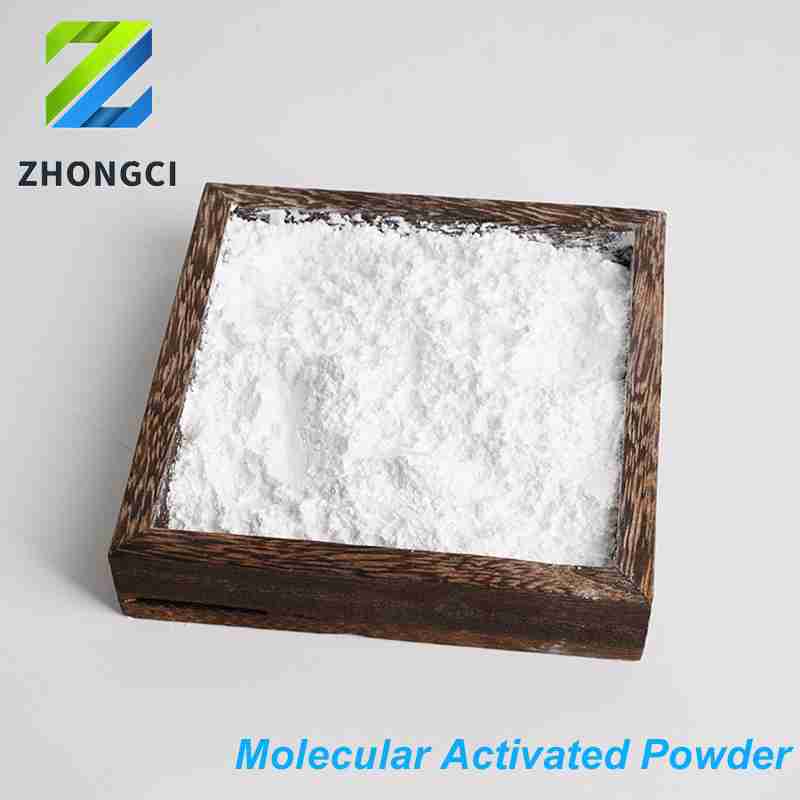
4A zeolite powder, commonly known as molecular sieve and scientifically named sodium aluminosilicate, an artificially synthesized sodium A-type zeolite with a pore size of 0.42nm. Its molecular formula is Na₁₂Al₁₂Si₁₂O₄₈·27H₂O or Na₁₂[(AlO₂)₁₂(SiO₂)₁₂]·27H₂O. Moreover, It belongs to the cubic crystal system, and the center of the unit cell is a cavity with a diameter of 1.14Å, connected by an 8-membered ring and 6 similar cavities. The free cavity diameter formed by this 8-membered ring structure is 4.12Å, hence the name 4A zeolite. It is a flowing white powder.
Synthesis Methods of 4A Zeolite Powder
Hydrothermal Method
The hydrothermal method has a simple technological process and stable product quality. It adopts Germany’s Y-type tube synthesis patent technology and high-speed mixing patent technology. However, this process has the disadvantage of high raw material cost. The specific steps are as follows: Add excessive water glass into water, heat to dissolve, and let it stand for a certain period of time. So, the supernatant is sodium silicate solution. Dissolve bauxite clinker in sodium hydroxide solution of a certain concentration, let it stand, take the supernatant and filter to obtain sodium metaaluminate solution. Then, slowly add sodium silicate solution into sodium metaaluminate solution under stirring, gel for 20 minutes, add a certain amount of seed crystal (directing agent), quickly heat up to 85°C for crystallization for 30 minutes, filter, wash, dry to obtain 4A zeolite, and obtain submicron 4A zeolite through ultrafine classification.
Bentonite Acid Treatment Method
The essence of this process is an improvement of the hydrothermal synthesis method. The difference is that bentonite is as the silicon source for acid treatment to remove iron to produce sodium silicate, and then sodium aluminate and sodium hydroxide added for hydrothermal synthesis. However, in addition to the high raw material cost, this process also increases problems such as difficulty in acid treatment, filtration, washing, and environmental pollution.
Kaolin Conversion Method
Represented by the kaolin conversion process of Union Carbide Corporation of the United States, this process uses kaolin as raw material, calcined at 600 – 800°C, then leached with alkali, gelled and crystallized to obtain 4A zeolite. It has the characteristics of wide raw material sources, simple process, and low production cost. The production process of 4A zeolite by kaolin calcination method is as follows: calcine kaolin in a high-temperature furnace, cool it, add an appropriate amount of tap water, heat up to 90°C, stir at a constant temperature for a certain period of time, then filter the product with a filter press, wash with water until the pH is about 11, dry at 100°C, and crush to obtain the final product 4A zeolite.
Properties of 4A Zeolite Powder
- Cation Exchange Capacity: It has calcium ion exchange capacity. These cations in the solution easily exchanged with external cations, and it has high stability. So, After the above treatment, the structure of the zeolite does not change qualitatively.
- Adsorption Performance: It has surface adsorption capacity and can be as an adsorbent and desiccant. Zeolite can easily remove part or all of the crystal water by heating or decompression.
Applications of 4A Zeolite Powder
- Detergent Industry: It is an environment-friendly phosphorus-free detergent additive that can replace sodium tripolyphosphate.
- Plastic Industry: To improve the structure and properties of low – density polyethylene (LDPE) microporous membranes, LDPE/4A zeolite blended microporous membranes prepared by thermally induced phase separation (TIPS) with diphenyl ether (DPE) as diluent. It is a long – acting thermal stabilizer for polyvinyl chloride (PVC), and has a synergistic effect when used with zinc stearate (ZnSt₂). Its thermal stability is significantly better than that of calcium stearate.
- Agriculture: It can be as a long – acting fertilizer and fertilizer slow – release agent. For example, zeolite combined with dihydrogenamine, hydrogen casein, rare earth elements and other trace elements to prepare fertilizer long – acting synergists, which can not only greatly extend the fertilizer efficiency period of nitrogen fertilizer, improve the utilization rate of nitrogen fertilizer, but also significantly improve the nutritional status of crops, promote crop growth and development, improve antiviral ability, and increase crop yield. It can also be as a feed additive. Using the adsorption and cation exchange properties of zeolite, zeolite used as a carrier to manufacture feed additives, which can enhance the antiviral ability of breeding animals, promote protein synthesis, accelerate weight gain, and improve feed utilization rate.
- Paper Industry: Using zeolite as a filler in the paper industry can improve paper performance and quality, increase porosity, enhance water absorption, make it easier to cut, improve writing performance, and have certain fire resistance.
- Coating Industry: Zeolite, as a filler and pigment in coatings, can endow coatings with properties such as antibacterial, wear – resistant, corrosion – resistant, heat – resistant and climate – resistant.
- Environmental Protection: It can be to adsorb Mn²⁺ in manganese slag leachate.