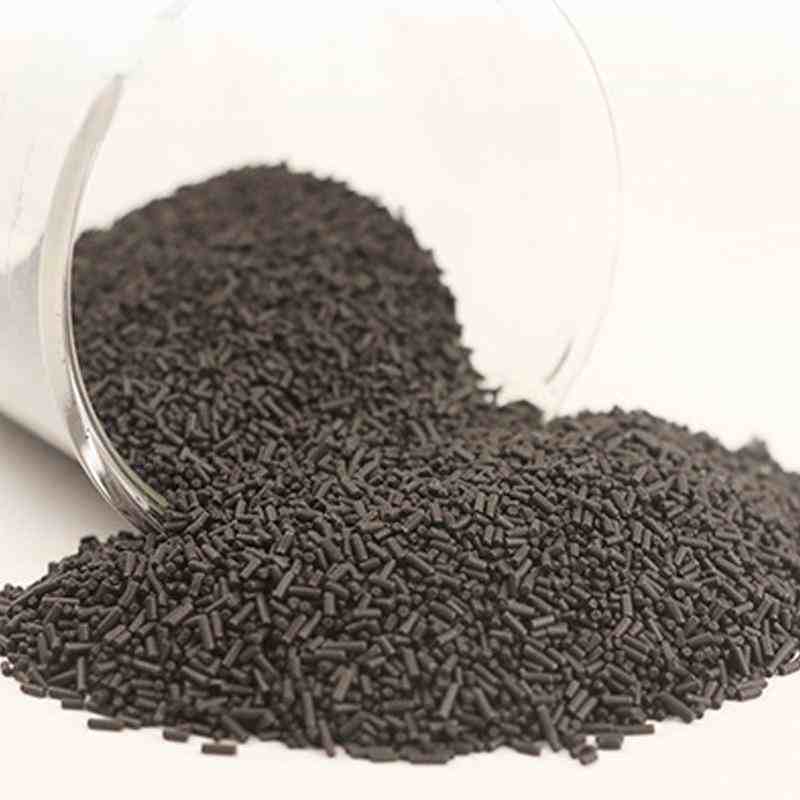
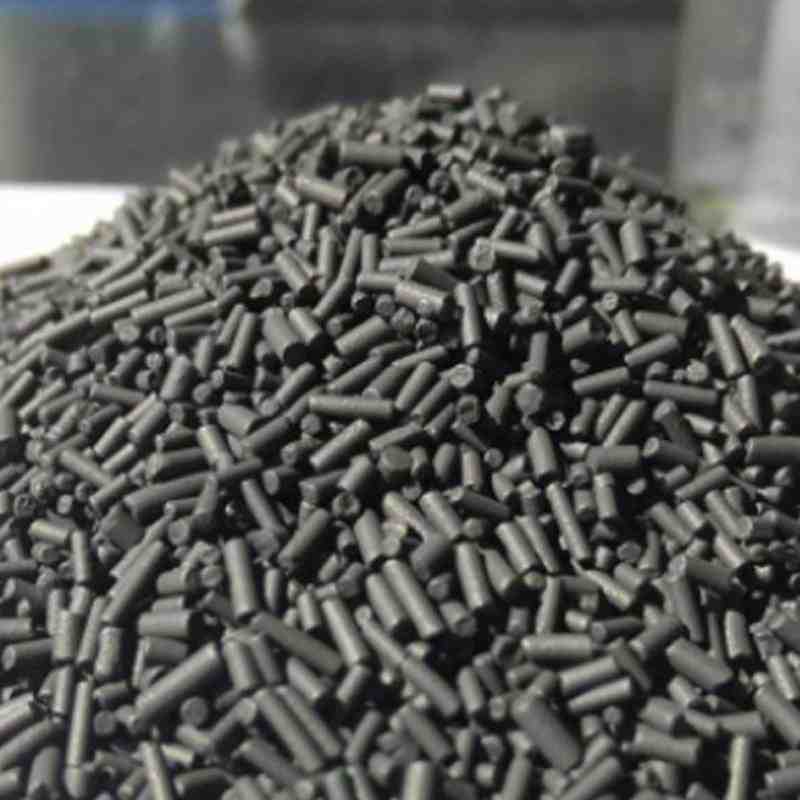
Carbon Molecular Sieves (CMS) are advanced microporous carbon materials engineered for highly selective gas separation and purification. Their exceptional efficiency stems from precisely controlled pore structures (typically 0.3–0.9 nm) and ultra-high surface areas, enabling superior kinetic separation of molecules based on size, shape, and diffusion rates. Below are key aspects of their technology and applications:
1. Core Mechanism & Structural Advantages:
- CMS materials possess a tunable pore size distribution, achieved through advanced carbonization and activation processes (e.g., using KOH or specific precursors like polyimides or coal mixtures). This allows precise molecular exclusion, where smaller molecules (like N₂ or O₂) diffuse rapidly into pores while larger molecules (like CH₄ or CO₂) are hindered or excluded.
- They exhibit exceptionally high specific surface areas (>3000 m²/g), providing vast adsorption capacity. The development of materials with a high mesopore ratio (~85%) further enhances transport kinetics.
- Integrally skinned asymmetric CMS membranes, derived from polymers with intrinsic microporosity (e.g., specific polyimides), synergize the robustness of carbon with the processability of polymers, offering stability in harsh organic solvent environments crucial for applications like Organic Solvent Nanofiltration (OSN).
2.Enhancing Separation Performance:
- Molecular-Level Filler Integration: Incorporating discrete molecular fillers. Such as Porous Organic Cages (POCs), into precursor polymer matrices significantly improves interfacial compatibility. This minimizes defects during pyrolysis, leading to CMS membranes with dramatically enhanced separation factors, particularly for critical pairs like CO₂/CH₄.
- Surface Modification: Controlled oxidation tailors surface chemistry, creating specific acid site distributions (weak, medium, strong). Optimizing CMS for roles beyond separation, such as catalyst supports.
- Additive Optimization: The use of additives, particularly iron series compounds, during carbonization significantly influences the final pore structure and air separation performance.
3.Key Applications Driving Demand:
- Industrial Gas Production: Central to Integrated High-Efficiency Nitrogen Generators, providing on-site, cost-effective N₂ production for industries like food packaging, electronics, and metallurgy.
- Energy & Environmental Separation: Critical for high-efficiency CO₂ capture from natural gas (CO₂/CH₄ separation) and biogas upgrading, contributing to decarbonization efforts.
- Air Separation: Efficiently producing oxygen-enriched air or high-purity nitrogen via Pressure Swing Adsorption (PSA) systems.
- Specialized Filtration: Advanced CMS membranes are enabling Organic Solvent Nanofiltration (OSN), offering energy-efficient solute/solvent separation in demanding chemical processing environments.
4.Material Development & Manufacturing:
- Precursors range from specialty polymers (e.g., Polyimides of Intrinsic Microporosity – PIM) to sustainable resources. Like lignite (through hydrothermal upgrading), walnut shells, wood chips, and petroleum coke.
- Processes involve meticulous carbonization condition control (temperature, atmosphere, time), activation (chemical, physical), and sometimes post-synthesis modification (oxidation). Specific commercial grades exist (e.g., Takeda CMS, Carbon Molecular Sieve 601).
- Future Outlook: Research focuses on refining precursor-filler interactions, developing ultra-thin yet robust membranes, expanding pore structure control, and exploring novel applications like hydrogen purification and hydrocarbon separations. High-Efficiency CMS continues to be a cornerstone technology for sustainable industrial processes demanding precise and energy-efficient molecular separations.
This introduction leverages the core technological principles, performance enhancements, major applications, and material developments highlighted across the search results. It emphasizes the “high efficiency” aspect through tunable porosity, advanced membrane structures, strategic filler integration, and critical industrial applications like nitrogen generation and CO₂ separation.