Introduction
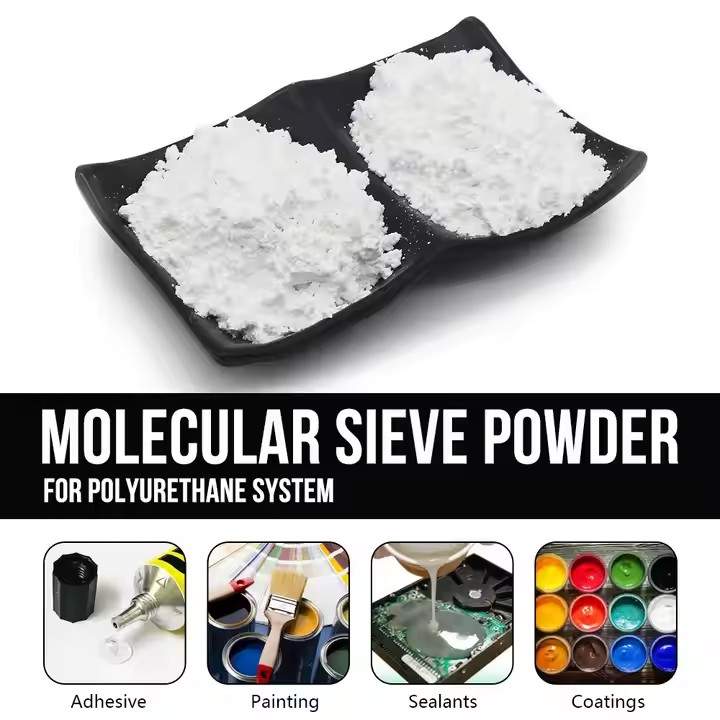
Activated powder, such as molecular sieve activated powder, widely use in various industries. This article aims to explore some common questions about it from a scientific perspective.
1. What is the main function of molecular sieve activated powders and how does it differ from defoamers?
The main function of molecular sieve powder is to absorb the excess moisture in the system. In contrast, defoamers are to eliminate foam and do not have the function of absorbing water. Molecular sieve powder breaks the balance between the water – phase and the oil – phase by absorbing water to achieve defoaming.
2. Why are larger pore – sized molecular sieve activated powders more expensive and why is the price of 4A the lowest?
The price of 4A molecular sieve powder is the lowest because 3A and 5A produce by replacing 4A. This replacement process adds to the cost, making 3A and 5A more expensive.
3. What is the difference between molecular sieve activated powders and raw powders?
The raw powder is the raw material for making molecular sieve activated powders. The raw powder has no activity and cannot absorb water, while the activated powder has strong activity due to the loss of most of its water during the high – temperature roasting process.
4. Which types of adhesives are suitable for using molecular sieve activated powders?
Molecular sieve activated powders can use in adhesives where trace amounts of water in the glue can affect the product properties. For example, in epoxy resin potting adhesives and polyurethane adhesives, the use of molecular sieve activated powders can reduce the moisture content, thereby improving the performance of the adhesive.
5. What is the temperature range that molecular sieve activated powder can withstand in glue?
Molecular sieve activated powders can withstand temperatures below 500 degrees Celsius. When the original molecular sieve powder roasted at a high temperature of 550 degrees Celsius, it loses its crystal water. When the temperature drops to room temperature, it will gradually absorb water and recover. However, when the roasting temperature reaches 900 degrees Celsius, the crystal structure is broken-up and cannot recover, losing its water – absorbing ability.
6. What is the recommend addition amount of molecular sieve activated powders?
The addition amount of molecular sieve activated powder determine by the trace moisture that needs to remove from the system. Its static water adsorption can reach 24%, which means that in an ideal state, it can absorb water up to 24% of its own weight.
7. Does molecular sieve activated powder affect the viscosity of glue?
Molecular sieve activated powder does not have the function of increasing viscosity. Its impact on the system viscosity is similar to that of other inorganic materials added to the system.
8. Can molecular sieve activated powder add to polyols?
In two – component polyurethane, the A component usually consists of polyester polyols and polyether polyols, and molecular sieve activated powder generally add to this A component.
9. Will molecular sieve activated powder release the absorbed water, for example, when placed in ink?
No, molecular sieve activated powder is a type of static molecular sieve and cannot regenerate in the system, so it will not release the absorbed water.
In conclusion, understanding these common questions about molecular sieve activated powders can help us use it more effectively in different industrial applications.