Carbon molecular sieve (CMS) VS. activated carbon are both widely used adsorbents with unique properties and applications. Here’s a comparison between the two:
1. Structure:
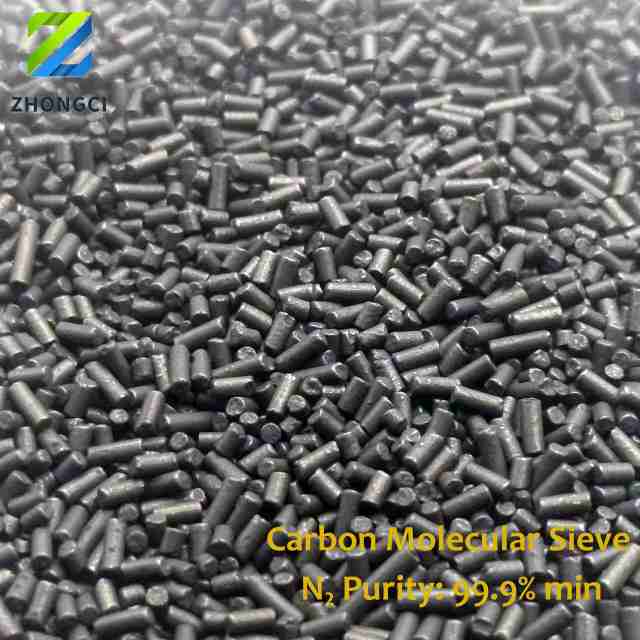
- Carbon Molecular Sieve: CMS is a rigid, porous material made from carbon. It has a highly ordered pore structure, which allows it to selectively separate gases based on their molecular size.
- Activated Carbon: Activated carbon is a highly porous form of carbon with a large surface area. It produced by heating carbon-rich materials in the presence of oxygen, creating a network of pores and functional groups that enhance its adsorption capacity.
2. Pore Size:
- Carbon Molecular Sieve: CMS has a uniform pore size distribution, typically ranging from 36 to 64 angstroms. This allows it to selectively separate gases such as oxygen, nitrogen, and carbon dioxide based on their molecular diameters.
- Activated Carbon: The pore size distribution of activated carbon is more varied, ranging from micropores to mesopores. This makes it suitable for adsorbing a wide range of molecules, including organic compounds, heavy metals, and other pollutants.
3.Applications
Carbon Molecular Sieve: CMS primarily used in gas separation applications, such as air separation, natural gas purification, and carbon dioxide removal. It also used in some industrial processes, such as hydrogen purification and fuel cell applications.
Activated Carbon: Activated carbon used in a wide range of applications, including water and air purification, odor control, heavy metal removal, and medical devices. It also used in various industrial processes, such as decolorization, deodorization, and catalyst support.
4.Selectivity:
- Carbon Molecular Sieve: Due to its uniform pore size distribution, CMS exhibits high selectivity for separating gases based on their molecular size. For example, it can efficiently separate oxygen and nitrogen in air separation applications.
- Activated Carbon: Activated carbon has a lower selectivity compared to CMS, but its high surface area and pore volume allow it to adsorb a wide range of molecules. This makes it suitable for applications where multiple contaminants removed simultaneously.
5.Regeneration:
- Carbon Molecular Sieve: CMS can be regenerated by heating it to a temperature above its working temperature, causing the adsorbed gas to desorb and the pore structure to return to its original state. However, repeated regeneration cycles may reduce its effectiveness over time.
- Activated Carbon: Activated carbon can also be regenerated by heating it to a high temperature, causing the adsorbed molecules to desorb. In some cases, chemical or physical reactivation methods may be necessary to restore its adsorption capacity.
In summary, carbon molecular sieve VS. activated carbon are both effective adsorbents with different properties and applications. CMS is ideal for gas separation applications due to its selective pore size distribution, while activated carbon is versatile and can be used for a wide range of adsorption tasks.