Fundamental Role of CMS for PSA Nitrogen Generation
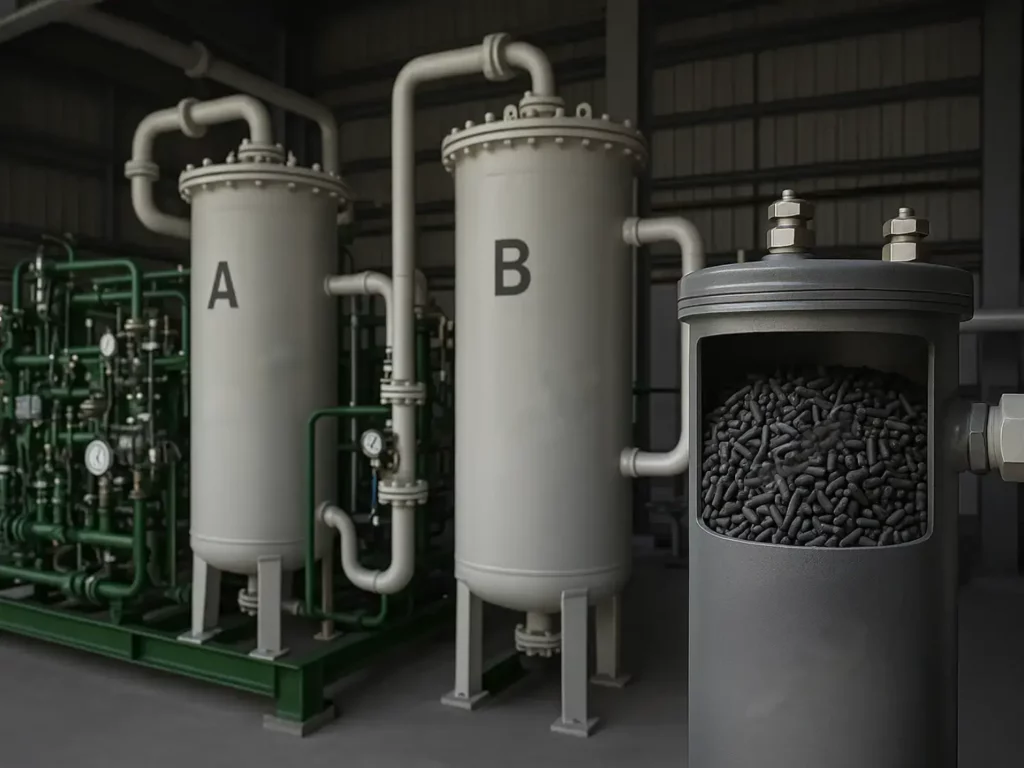
Carbon Molecular Sieve (CMS) serves as the core adsorbent in PSA nitrogen generation systems, leveraging its selective adsorption properties to separate nitrogen from air. Under specific pressure conditions, CMS exhibits a significantly higher adsorption capacity for oxygen compared to nitrogen. This characteristic enables the separation of oxygen and nitrogen through a cyclic process of pressurized adsorption and depressurized desorption. The mechanism relies on the differential diffusion rates of oxygen and nitrogen molecules in CMS micropores: oxygen diffuses faster and is preferentially adsorbed, while nitrogen remains in the gas phase for collection.
Technical Advantages of CMS-based PSA Systems
- Efficient Operation: CMS-filled PSA generators can produce nitrogen within 15–30 minutes of startup, ensuring rapid response to demand.
- Automation & Reliability: The systems operate fully automatically via programmed pneumatic valves, eliminating the need for continuous manual supervision.
- Customization Flexibility: CMS allows tailoring of nitrogen purity (97–99.9995%), flow rates (1–2000 Nm³/h), and pressure levels to meet specific industrial requirements.
- Longevity: Advanced CMS filling techniques enhance compactness and structural stability, extending the adsorbent lifespan.
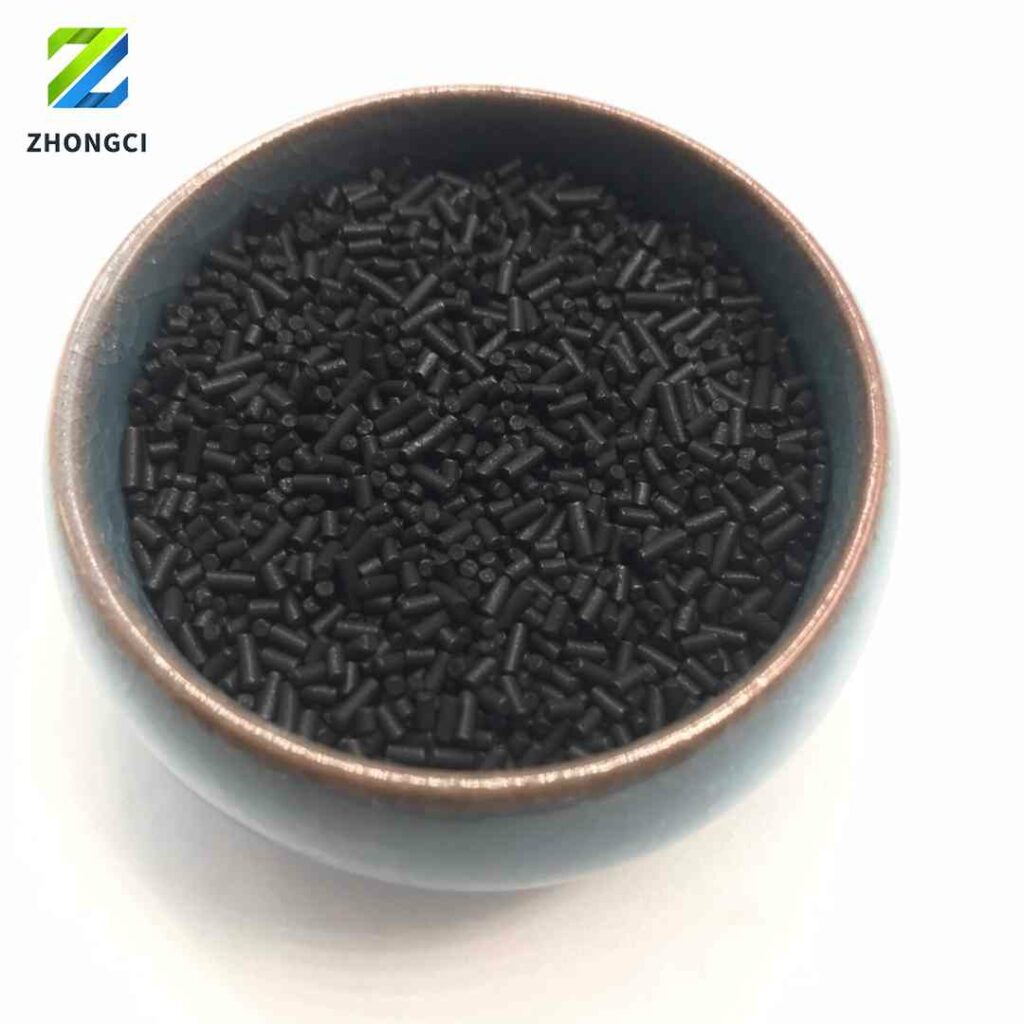
CMS Material Characteristics and Performance
CMS is typically a black extruded pellet synthesized from coal or resin precursors. Key parameters include:
- Particle Sizes: Common diameters range from 0.95mm to 1.8mm, optimizing adsorption efficiency and gas flow dynamics.
- Pressure Adaptability: Effective adsorption occurs under pressures of 0.75–0.8 MPa, with desorption triggered by pressure reduction.
- Purity Control: Models like CMS 220 and CMS 330 are engineered for high selectivity, supporting ultra-high purity nitrogen production.
Comparison with Alternative Adsorbents
While traditional materials like zeolites are used in gas separation, CMS offers distinct benefits for PSA nitrogen generation:
| Feature | CMS | Traditional Zeolites |
|---|---|---|
| O₂/N₂ Selectivity | Higher, due to tailored micropore structure | Lower, broader pore size distribution |
| Regeneration Efficiency | Rapid desorption under depressurization | Often requires thermal regeneration |
| Industrial Suitability | Ideal for high-flow, on-site nitrogen needs | Better suited for low-pressure applications |
Applications and Industry Impact
CMS-based PSA systems are widely adopted in sectors such as food preservation, electronics manufacturing, and chemical processing. Their energy efficiency (low power consumption) and compact design make them a preferred alternative to cryogenic distillation for medium-scale nitrogen production. Recent advancements in MOFs (Metal–Organic Frameworks) have shown potential to further enhance selectivity, but CMS remains dominant due to its (mature) industrial infrastructure and cost-effectiveness.
In summary, Carbon Molecular Sieve is indispensable in modern PSA nitrogen generation, combining high performance, operational flexibility, and reliability to meet diverse industrial demands.