1. Definition and Core Features
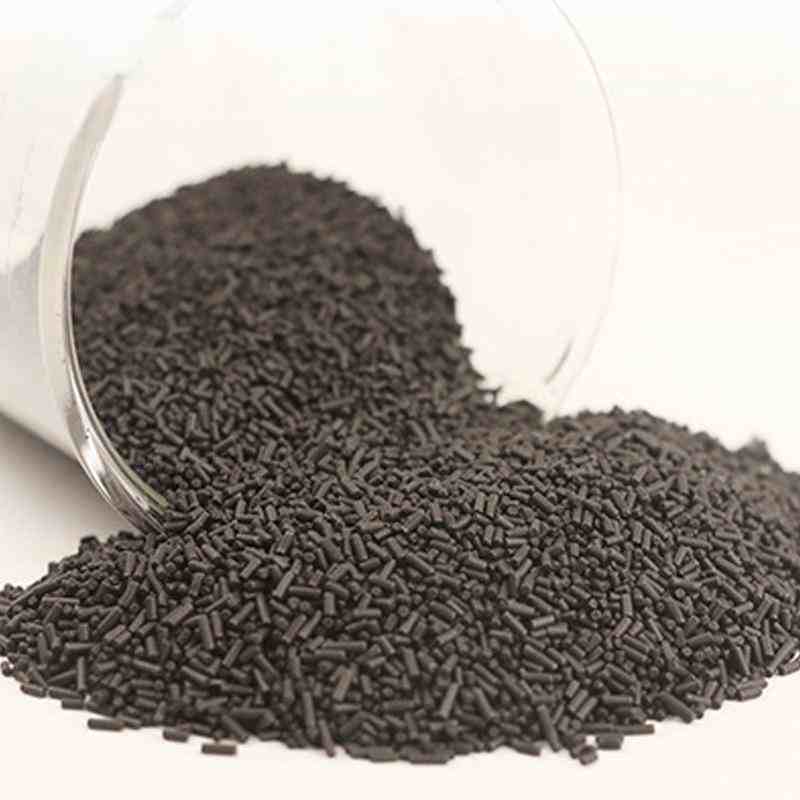
High-strength Carbon Molecular Sieve (CMS) are advanced porous carbon materials engineered for superior mechanical robustness and precise molecular separation capabilities. Unlike conventional activated carbon, CMS exhibits a tunable ultra-microporous structure (pore sizes < 1 nm), enabling selective gas separation while maintaining exceptional compressive strength and thermal stability. This combination is critical for industrial applications requiring durability under high-pressure or cyclic operations.

2. Manufacturing Processes of High-strength Carbon Molecular Sieve (CMS)
- Raw Materials: Typically derived from coal, petroleum coke, or biomass (e.g., walnut shells) .
- Key Steps:
- Carbonization: Precursor materials are pyrolyzed under controlled conditions (temperature, atmosphere). Conditions like carbonization temperature directly impact pore size distribution and mechanical integrity.
- Activation/Chemical Modification:
- KOH activation creates ultra-high surface areas (>3,000 m²/g) and refines micropores.
- Cross-linking with Polyphosphoric Acid (PPA): Enhances both strength and separation performance by forming a hybrid polymer matrix, acting as a porogen and cross-linker.
- Additive Optimization: Iron-series additives improve CMS mechanical properties and gas-selectivity by modulating pore geometry during carbonization.
3. Performance Metrics of High-strength Carbon Molecular Sieve (CMS)
- Gas Separation Efficiency:
- CO₂/CH₄ Selectivity: Up to 81.5 (278% higher than pristine polymer membranes).
- Permeability: CO₂ permeability ≈ 1,378 Barrer, He permeability ≈ 1,431 Barrer (10× higher than precursor membranes).
- Structural Strength:
- High mesopore ratio (85%) balances adsorption capacity and structural stability.
- Maintains performance during long-term operation (validated in 7-day continuous tests).
4. Applications
- Gas Separation:
- Air Separation (O₂/N₂): CMS membranes efficiently isolate oxygen from air using kinetic diameter differences.
- Natural Gas Purification: Removes CO₂ and H₂S from methane streams.
- Energy-Efficient Systems: Used in pressure-swing adsorption (PSA) units for hydrogen purification and biogas upgrading due to low energy consumption.
5. Advantages Over Alternatives
| Feature | High-Strength CMS | Traditional CMS/Polymers |
|---|---|---|
| Mechanical Strength | Exceptional compressive resistance | Prone to fracture under stress |
| Permeability | Ultra-high (>1,400 Barrer for He) | Moderate (100–500 Barrer) |
| Selectivity | Tunable via PPA cross-linking | Fixed by precursor material |
| Stability | Long-term thermal/chemical resistance | Degrades under harsh conditions |
6. Future Directions
- Precursor Innovation: Hybrid polymers (e.g., PPA-cross-linked polyimides) to enhance strength/permeability trade-offs.
- Morphology Control: Optimizing mesopore-to-micropore ratios for target molecules (e.g., H₂ vs. CO₂).
- Modular Designs: Tubular CMS membranes for scalable industrial modules.
✨ Summary: High-strength CMS merges robustness (critical for high-pressure systems) and molecular precision (kinetic diameter-based separation), positioning it as a next-generation material for sustainable gas processing.