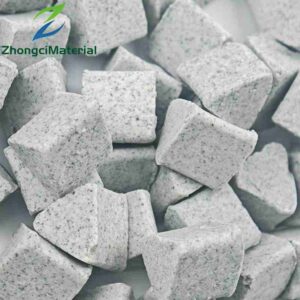
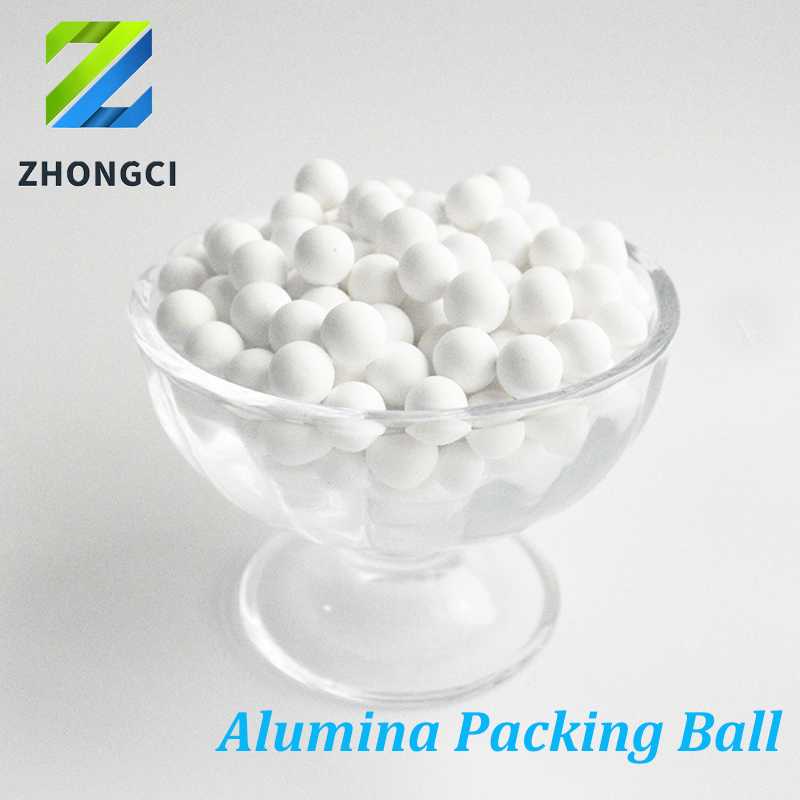
After using inert alumina ceramic balls, it is better that you do not reuse them. Using inert ceramic balls again may be mix with various impurities, and due to the temperature difference in the reactor, some inert ceramic balls may have poor strength, while others may have good strength. The manufacturer cannot make an accurate judgment on whether the quality still meets national standards, and there is no professional inert ceramic ball testing equipment. If unqualified ceramic balls are use, it will affect the entire production, which is not worth the loss.
Especially for heavily corroded reaction towers, replacement is more frequent. Inert alumina ceramic balls are in high temperatures for a long time, which may appear fine on the surface, but in reality, their quality is very poor, especially their compressive strength. If the inert ceramic balls are crush during reuse, it will affect the entire production process.
Zhongci 92% & 95% Inert Alumina Ceramic Balls
Properties
- Chemical stability: Zhongci Inert ceramic balls have stable chemical properties. They do not react with acids, alkalis, salts, and organic solvents. This characteristic enables them to be in various chemical reaction environments without being corroded or participating in unwanted chemical reactions.
- High strength: They possess high mechanical strength, which allows them to withstand the pressure from the catalyst above and the impact of gas and liquid flow in the reactor. For example, the Φ10 porcelain ball has a single – ball crushing force of ≥1500N, and the Φ50 porcelain ball has a single – ball crushing force of ≥18000N.
- Thermal stability: With excellent thermal stability, these ceramic balls can endure high temperatures and temperature changes during the production process. Their heat – resistant temperature is generally ≥1300 – 1700℃ and can tolerate temperature variations of up to 400℃ .
- Low water absorption: The water absorption rate of alumina ceramic balls is ≤5%, which ensures their performance will not be significantly affect by moisture in the environment