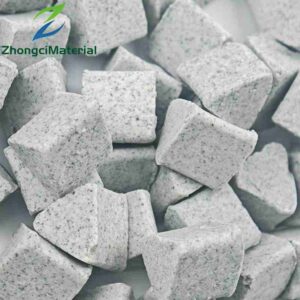
The main natural gas deep dehydration devices at home and abroad currently utilize the strong adsorption of water vapor molecules in the gas by synthetic fluorite molecular sieves to achieve deep dehydration.
Application of Molecular Sieve in Deep Dehydration of Natural Gas
Synthetic zeolite molecular sieve is a type of aluminosilicate crystal with a strict framework structure. The internal framework formed by the tetrahedral structure of silicon. And aluminum has numerous interconnected micropores in three dimensions. It is a strongly polar adsorbent with uniform pore size and high selective adsorption and separation ability. As the silicon to aluminum ratio increases, the polarity of the molecular sieve gradually decreases. Therefore, molecular sieves with low silicon to aluminum ratios have a stronger ability to adsorb water. And they are suitable for deep dehydration of gases.
Advantages of Molecular Sieves
The main advantages are as follows:
① Molecular sieves can deeply dehydrate gases. Under normal circumstances, its adsorption capacity is higher than other adsorbents, which can reduce the size of the drying tower and save costs.
② Molecular sieves can also effectively dry gases at higher temperatures.
③ Molecular sieves can selectively adsorb water, avoiding the occurrence of heavy hydrocarbon co adsorption and causing adsorbent failure.
④ Molecular sieves are not easily damaged by liquid water, while adsorbents such as silica gel are easily brittle when exposed to water.
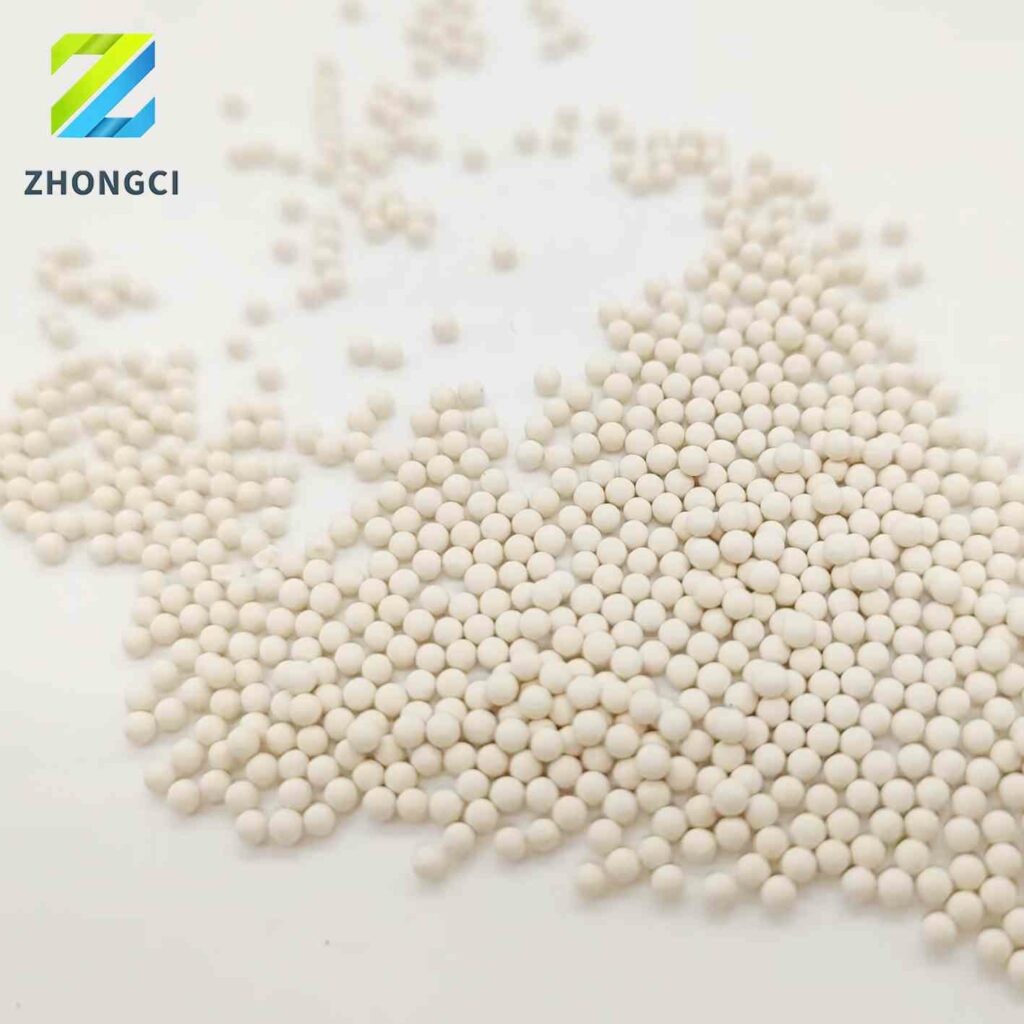
Application of Molecular Sieve in Deep Dehydration of Natural Gas
As the amount of water adsorbed by the molecular sieve in the adsorption tower increases, the adsorption capacity of the molecular sieve for water molecules gradually decreases. When a certain value is reached, the water molecules in the gas at the outlet of the adsorption tower will exceed the specified value. It indicates that the molecular sieve in the tower has reached adsorption saturation. At this point, it is necessary to regenerate the molecular sieve inside the adsorption tower.
The regeneration process is the process of expelling water molecules adsorbed in the micropores of a molecular sieve. Thereby reactivating the molecular sieve. The design of the regeneration process is crucial for the continuous operation of the dryer. As a tower body filled with molecular sieves for adsorbing water, no matter how much design margin is selected. The molecular sieves will eventually become saturated and lose their ability to adsorb water. Therefore, selecting a reasonable regeneration process and parameters has become the focus of dryer design. A reasonable regeneration process can achieve the goal of effective regeneration with minimal consumption. (electric heating power, gas consumption rate) as much as possible.