Application of activated alumina ball are solid materials with internal empty pore structures, specific surface area and adjustable pore size.
Both have good adsorption capacity and are common adsorbents in industrial production.
Let’s use an article to introduce the application of activated alumina and molecular sieves.
1. Application of activated alumina
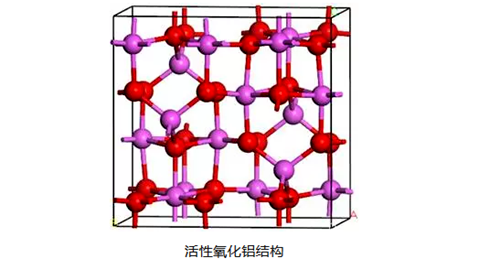
- Activated alumina (γ-Al2O3) is a porous, highly dispersed solid material with large surface area, good adsorption performance, surface acidity and good thermal stability.
- Activated alumina belongs to transitional form alumina.
- It is a powdery, spherical or columnar white solid.
- Its crystal structure is different from that of industrial alumina.
- Activated alumina belongs to the tetragonal crystal system, and the lattice is very similar to the structure of spinel.
- The crystals of activated alumina disorder, and this disorder is mainly by the disorder of aluminum atoms. Because of the disorder of aluminum atoms:
- by controlling its preparation conditions, a variety of activated alumina products with different specific surface areas. so it is mostly in adsorption drying and catalysis.
2. Application of activated alumina ball in adsorption drying
The main industrial applications of activated alumina as an adsorbent include gas drying, liquid drying, water purification, selective adsorption in the petroleum industry, and chromatographic separation processes.
The liquids dried by activated alumina mainly include: aromatic hydrocarbons, high molecular weight olefins, gasoline, kerosene, cyclohexane, propylene, butene, and many halogenated hydrocarbons.
When these liquids come into contact with alumina, the two will not react or polymerize.
At the same time, the dried liquid does not contain components that are easily on the surface of alumina and difficult to remove during regeneration.
In terms of water purification and adsorption, activated alumina is mainly to remove fluoride in drinking water.
And it is also very effective in eliminating the color and odor of industrial wastewater.
In addition, activated alumina is also widely in the recovery and selective adsorption of carbohydrates and the maintenance of power system oil.
3. Application in adsorption drying
(1) As a catalyst carrier. In simple catalytic reactions, activated alumina does not directly participate in the catalytic process.
Its role is to dilute, support and disperse precious metals. More than 70% of activated alumina is as a catalyst carrier.
In addition to the above functions, in some reactions, activated alumina also has the function of enhancing thermal stability and mechanical stability.
For example, the Pd/Al2O3, Cu/r-Al2O3 used in automobile exhaust purification catalysts and the catalysts for petroleum cracking reactions all belong to this type.
The catalysts for olefin hydrogenation reactions supported by nickel on activated alumina have a greater thermal stability range than the catalysts supported by nickel on diatomaceous earth.
(2) As an active catalyst, activated alumina has obvious adsorbent characteristics and can activate many bonds, such as H-H bonds, C-H bonds, etc.
Therefore, it can be directly added to the reaction system as an active catalyst .in reactions such as hydrocarbon cracking and alcohol dehydration to ether.
For example, in the dehydration of ethanol to produce ethylene, there are both acidic and basic centers on the surface of activated alumina.
4. Usage As Catalyst
Therefore, activated alumina itself is an excellent catalyst. However, there are not many cases of activated alumina as industrial catalysts.
(3) Used as an active component, some catalytic reactions require the catalyst to have dual functions.
That is, the active center provided by the active component.
And the acid and alkaline center provided by the carrier.
For example, in the catalytic reforming reaction of gasoline fraction, the catalyst is composed of 0.35% Pb deposited on a high-purity activated alumina with a surface area of 200 cm2/g.
And 1% chloride is added to improve its acidity.
For the cracking reaction of n-heptane, chlorinated activated alumina with a sodium content of less than 50×10-6 is selected, and 1% fluorine is added.
Its cracking activity reaches 66%, which is due to the existence of four active centers in activated alumina.
Therefore, activated alumina can provide active components for a variety of catalytic reactions.
The application of activated alumina is mainly based on catalyst carriers.
And the fields involved include: organic chemical industry, petrochemical industry, polymer chemistry, etc.
Therefore, the market for activated alumina is very broad.