As a commonly used desiccant and adsorbent, the service life of activated alumina balls is affected by multiple factors such as operating environment, application scenarios, and regeneration maintenance, and usually fluctuates within the range of 1-8 years. The following provides specific explanations from different application scenarios and judgment criteria.
Service life of activated alumina balls under different application scenarios
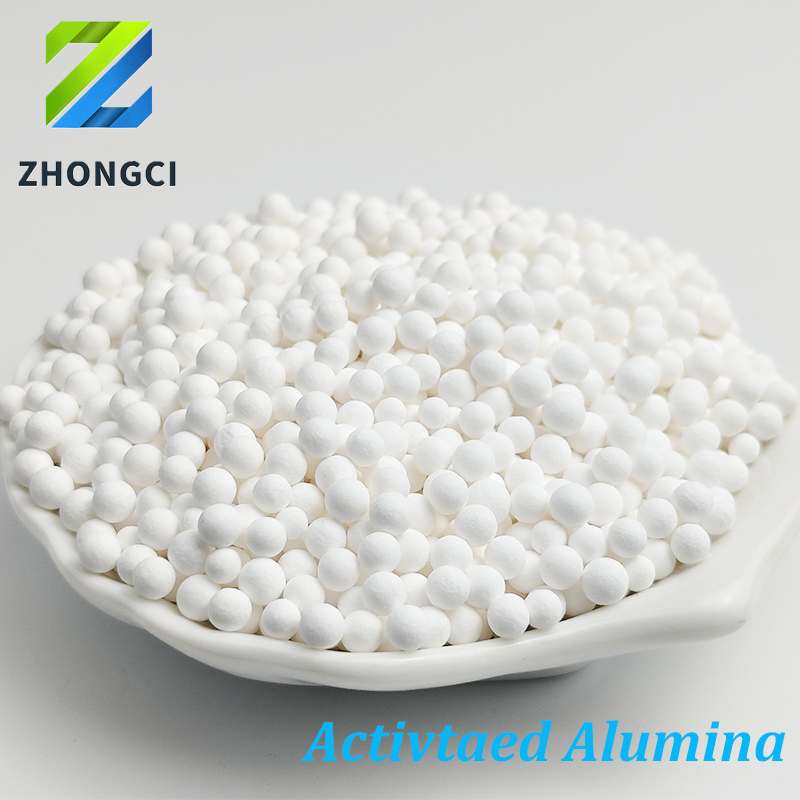
Industrial gas drying scenario: In equipment such as air compression dryers and pressure swing adsorption dryers, the regular replacement cycle for activated alumina balls is 1-2 years. If the equipment operates at a high frequency, processes high gas humidity, or has high working intensity, its service life shortened to about 1 year.
Water treatment defluorination scenario: As a defluorination filter material, its service life is relatively long, up to 6-8 years. But it treated with 3% dilute hydrochloric acid every six months to remove surface impurities and maintain the fluoride removal effect.
Universal drying scenario: In gas-liquid phase drying in industries such as petrochemicals, oxygen production, and textiles, the service life is generally 2-6 years due to the influence of operating conditions such as inlet temperature and humidity.
Determination of service life and replacement standards
Appearance change: If the color of the activated alumina balls changes from pure white to yellow brown, it may cause a decrease in adsorption capacity due to impurity contamination and replacement needs to consider.
Service life: In industrial drying scenarios, if continuous use exceeds 2 years, it is to conduct performance testing or replace directly; In the defluorination scenario, it replaced as a whole after reaching a design lifespan of 6-8 years.
Performance indicators: When processing gas, if the dew point temperature and humidity of the outlet gas increase significantly; The significant decrease in fluoride removal efficiency in water treatment indicates the failure of activated alumina balls.
Key measures to extend service life
Regeneration treatment: By high-temperature regeneration (specific regeneration temperature parameters referred to), the adsorbed water discharged to restore the adsorption performance of activated alumina balls and make them reusable. For example, in gas drying scenarios, the cycle life extended through non thermal or micro thermal regeneration devices.
Regular maintenance: In the application of fluoride removal in water treatment, clean with 3% dilute hydrochloric acid every six months to remove surface sediments; Industrial drying equipment regularly inspected for sealing to prevent impurities from entering and affecting the performance of the adsorbent.