Overview of Zeolite Molecular Sieves
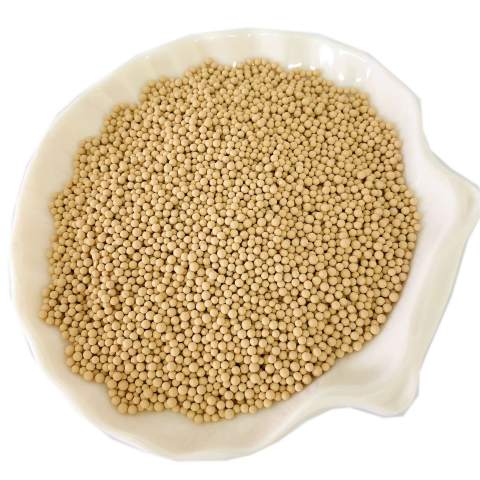
Zeolite molecular sieves are crystalline silicates or aluminosilicates composed of tetrahedral structural units of silicon, aluminum, and oxygen elements. They possess unique pore structures and adjustable pore sizes, enabling selective adsorption and separation of gases, liquids, and ions based on molecular shape and size. Due to their high selectivity, large adsorption capacity, low energy consumption, and environmental friendliness, they widely used in chemical, petroleum, environmental protection, and other fields .
Zeolite molecular sieves can be classified into natural zeolites and synthetic zeolites based on their composition and structure. Natural zeolites are mainly in the Earth’s crust, while synthetic zeolites can be through chemical reactions. According to pore size, they divided into large – pore, medium – pore, and small – pore zeolites, each with different application areas.
Synthesis Methods of Zeolite Molecular Sieves
After long-term exploration, researchers at home and abroad have continuously improved and innovated traditional methods. Currently, the synthesis of zeolite molecular sieves mainly includes hydrothermal synthesis, solvothermal synthesis, vapor phase transfer method, dry conversion method. (solvent-free) dry powder system synthesis method, combinatorial chemistry hydrothermal method, ionothermal synthesis method, and microwave radiation synthesis method.
- Hydrothermal Synthesis Method: It is the basic approach for zeolite synthesis. The process involves thoroughly mixing alkali (such as NaOH, KOH), alumina, silica, and water in a certain proportion. Heating them in a hot aqueous solution in a closed container. And forming zeolites through nucleation, growth, crystallization, and other processes.
- Hydrothermal synthesis reactions divided into low – temperature hydrothermal synthesis (25 – 150°C) and high – temperature hydrothermal synthesis (>150°C) based on the crystallization temperature.
- Generally, low – silicon – aluminum ratio zeolite molecular sieves synthesized under low – temperature hydrothermal synthesis, while high – silicon – aluminum ratio molecular sieves synthesized under high – temperature hydrothermal synthesis. As the most traditional method for synthesizing zeolite molecular sieves, it is still widely at home and abroad.
- Solvothermal Synthesis Method: This method uses non – aqueous solvents instead of water as dispersants to synthesize zeolites.
- Vapor Phase Transfer Method: It proposed by Xu et al. in 1990.
- Dry Conversion Method: Derived from the vapor phase synthesis method, this synthesis involves uniformly mixing the structure – directing agent in the amorphous gel and using water as the liquid solvent to synthesize zeolites. The difference from the vapor phase synthesis method is that the dry conversion method mixes the directing agent in the solid reactants instead of the liquid water solvent, and uses non – volatile substances such as quaternary ammonium bases and quaternary ammonium salts as structure – directing agents instead of volatile substances such as ethylenediamine and triethylamine. Using this method, various types of zeolite molecular sieves such as mordenite and ZSM – 5 have successfully synthesized.
Challenges and Research Progress in Synthesis
The traditional synthesis methods of zeolite molecular sieves mostly use chemical raw materials such as sodium silicate and sodium aluminate. So they have mature processes and high product purity but are expensive. Moreover, the synthesis process usually requires the presence of organic templates. This produces a large amount of harmful gases and wastewater, not only polluting the environment but also increasing production costs .
In recent years, the latest research progress in the synthesis of zeolite molecular sieve materials using industrial solid wastes as raw materials has systematically summarized, including fly ash, perlite industrial waste, coal gangue, fluid catalytic cracking (FCC) waste catalysts, lithium slag, bauxite slag, waste porcelain, and waste glass . This not only reduces the cost of synthesizing zeolite molecular sieves but also provides a new way for the recycling of industrial solid wastes.
Conclusion
Synthetic zeolite molecular sieves, with their unique structural properties and excellent performance, play an important role in various fields. Although there are still challenges in the synthesis process, the continuous emergence of new synthesis methods and the research on using industrial solid wastes as raw materials will promote the sustainable development of zeolite molecular sieve synthesis technology, expanding their application prospects.