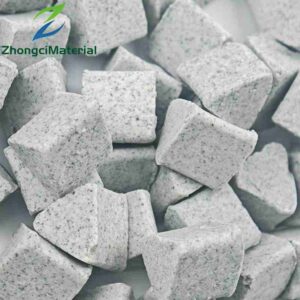

Molecular sieve dewaxing is a process that utilizes the selective adsorption properties of molecular sieves to remove n-alkanes from fractions such as gasoline, jet fuel, and diesel. Therefore, it is not only an important means for refining petroleum products in refineries but also a crucial production method for liquid paraffin (see petroleum wax).
Key Characteristics and Principles of Molecular Sieve Dewaxing
- Selective Adsorption Mechanism: By using 5A molecular sieves (with a micropore diameter of 5.2 Å), n-alkanes selectively adsorbed from mixed hydrocarbons.
- Industrial Process Nature: It is a gas-solid adsorption and desorption process. In industrial processes, adsorption and desorption operations carried out in two or more adsorbers.
Applications of Molecular Sieve Dewaxing
- Enhancing Gasoline Octane Number: Molecular sieves dewaxing units initially used for this purpose.
- Reducing Jet Fuel Freezing Point: This is another important application of the technology.
- Producing Liquid Petroleum Wax: Which serves as a raw material for detergents. China’s existing molecular sieves dewaxing units mainly used for this.
- Manufacturing Low-freezing Diesel: To meet specific performance requirements.
Development and Practice of Molecular Sieves Dewaxing in China
China built its first molecular sieves dewaxing unit in the 1960s. Through continuous development and improvement, the technology widely applied in industrial production.