
Introduction
Molecular sieves are critical adsorbents for hydrogen (H₂) purification, leveraging their uniform pore structures to separate gases based on molecular size and polarity. As demand for high-purity hydrogen surges in energy and industrial sectors, optimizing these materials remains paramount. This article examines their working principles, current applications, and research frontiers.
1. Fundamental Mechanisms
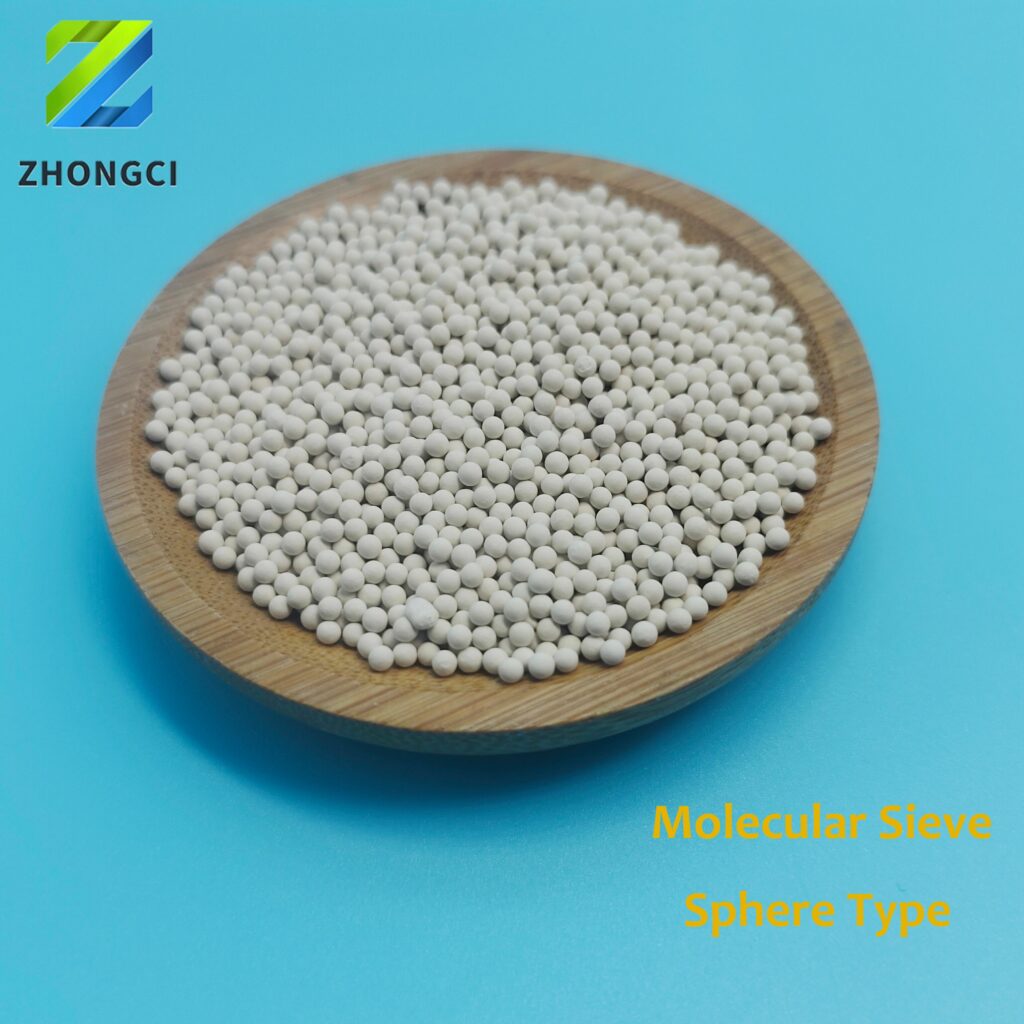
Molecular sieves (e.g., zeolites) selectively adsorb impurities from H₂ streams via:
- Size Exclusion: Pores (typically 3–5 Å) block larger molecules (e.g., CO₂, N₂).
- Polarity-Driven Adsorption: Electrostatic interactions trap polar contaminants (H₂O, H₂S).
- Kinetic Separation: Exploiting diffusivity differences (e.g., faster H₂ permeation vs. slower CH₄).
Recent studies highlight their role in trapping protons and minimizing interference from ubiquitous molecular hydrogen (H₂) in ultrahigh vacuum systems, ensuring measurement accuracy in sensitive experiments.
2. Industrial Deployment
a) Pressure Swing Adsorption (PSA) Systems
- Principle: Cyclic adsorption/desorption driven by pressure changes.
- Efficiency: Achieves >99.999% H₂ purity by removing CO, CO₂, and hydrocarbons.
- Device Innovation: Modern molecular sieve variable adsorption hydrogen production devices integrate multi-bed designs for continuous operation.
b) Hybrid Applications
- Combines with cryogenic separation for liquefied H₂.
- Used alongside palladium membranes for ultra-high-purity requirements.
3. Challenges and Solutions
a) Contaminant Interference
- Molecular hydrogen interactions cause proton loss or mis-identification in precision traps, necessitating stringent impurity control .
- Mitigation: Pre-treatment filters for H₂O/H₂S and surface-modified sieves (e.g., ion-exchanged zeolites).
b) Limited Trace Gas Detection
- Weak absorption signatures of hydroxyl (OH) radicals in interstellar environments parallel challenges in monitoring trace impurities. Solutions include:
- Enhanced spectroscopic sensors.
- Higher-sensitivity adsorbents (e.g., titanosilicates).
c) Low-Density Gas Environments
- In diffuse molecular gas (e.g., galactic damped Lyα absorbers), negligible H₂ formation occurs due to low density and UV radiation. This mirrors dilute industrial streams where adsorption kinetics require optimization.
4. Emerging Innovations
| Technology | Advancement | Impact |
|---|---|---|
| Metal-Organic Frameworks (MOFs) | Tunable pore sizes (e.g., ZIF-8) and functional groups | Higher selectivity for CO₂/CH₄ separation |
| Carbon Molecular Sieves | Hydrophobic surfaces reduce water affinity | Lower regeneration energy |
| In-situ Diagnostics | Synchrotron X-ray/THz spectroscopy (inspired by interstellar OH observations) | Real-time adsorbent performance monitoring |
5. Future Perspectives
- Astrophysics-Inspired Design: Studies of H₂ in low-density galactic regions could inform materials resilient to harsh operational environments.
- Green Hydrogen Integration: Sieves coupled with electrolyzers for direct impurity removal during production.
- AI-Driven Optimization: Machine learning for predictive adsorption modeling under dynamic conditions.
Conclusion
Molecular sieves are indispensable for high-purity hydrogen purification, yet challenges in impurity interference and trace detection persist. Cross-disciplinary insights—from proton trap experiments to interstellar hydride analyses —are accelerating material innovations. Future breakthroughs will hinge on merging foundational adsorption science with cutting-edge functional materials.